Back in Time to the Pine Apple Inn
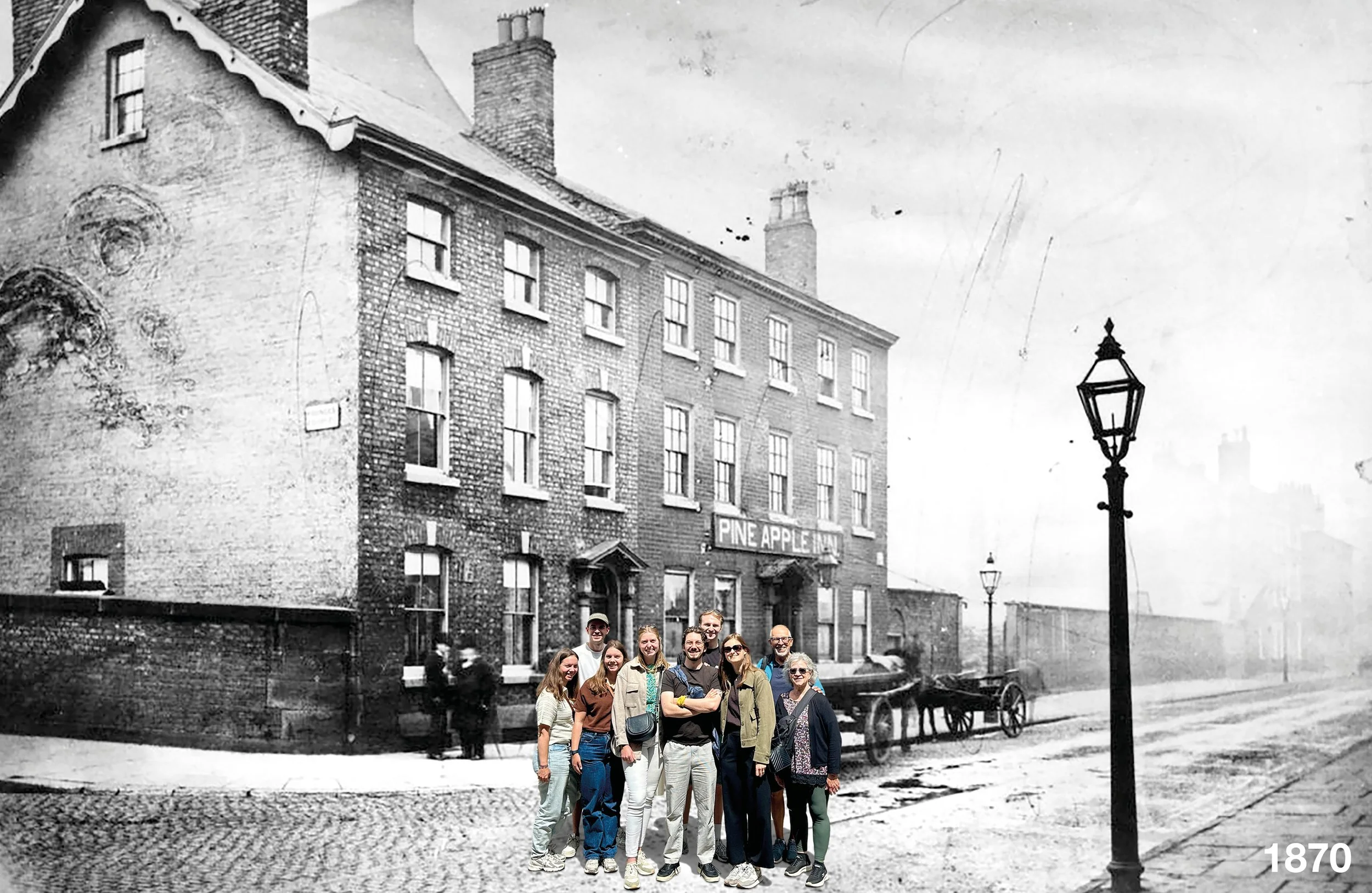
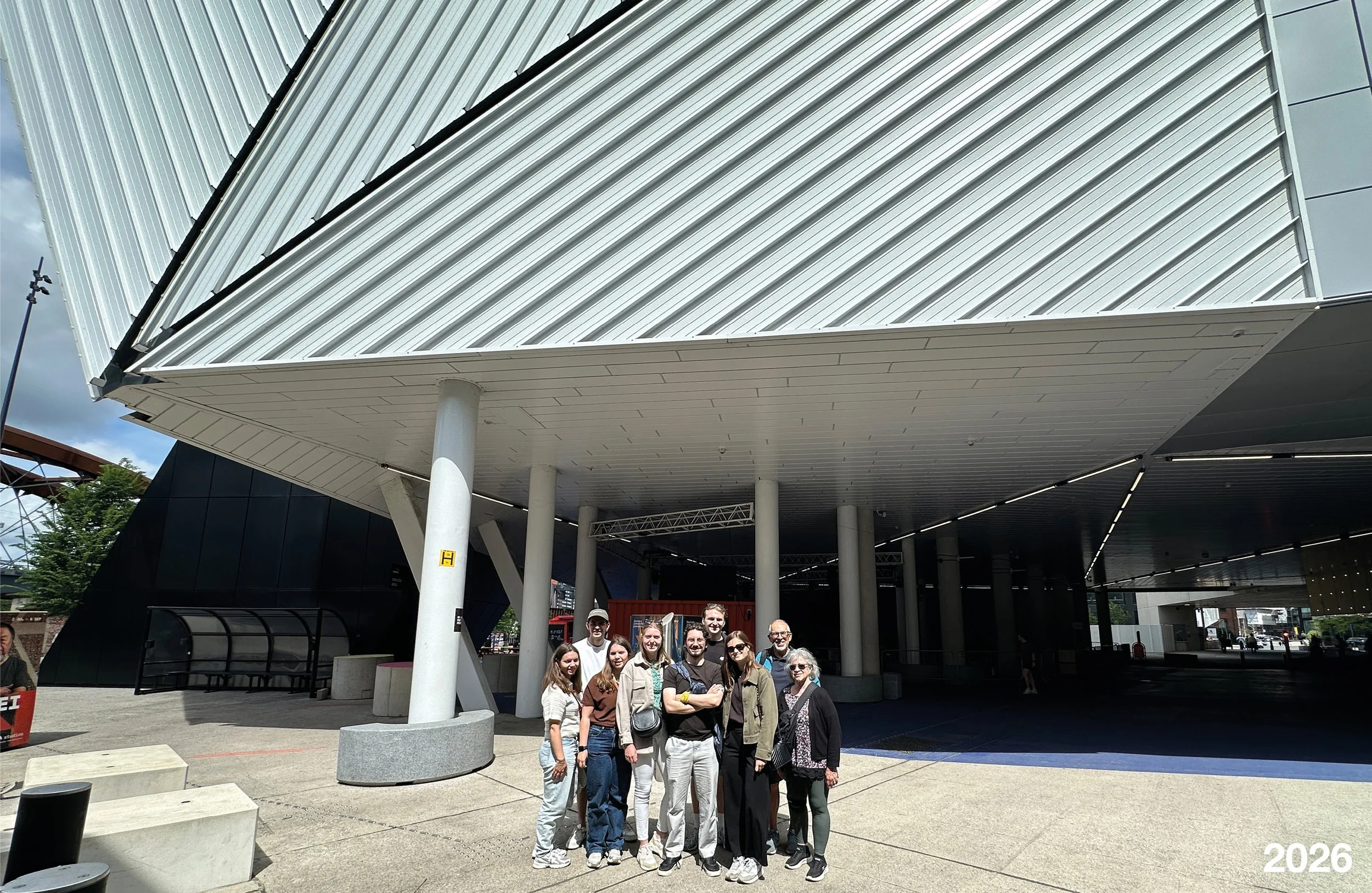
Rewind 150 years, and my walking tour group would have been standing outside the old Pine Apple Inn on Water Street.
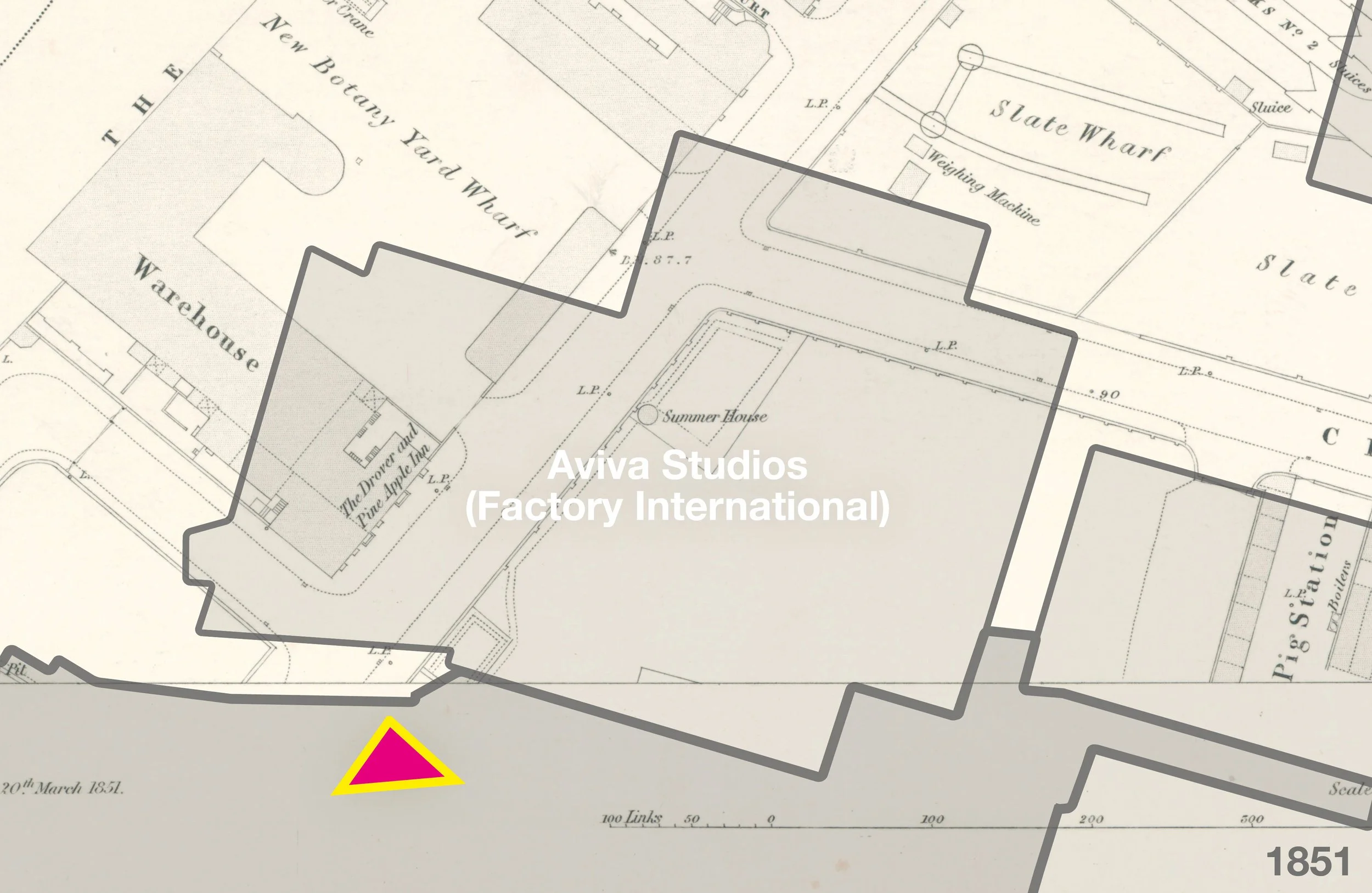
Today, they’re underneath the huge Aviva Studios, home of Factory International, where the auditorium now straddles the pedestrianised section of Water Street and lands almost exactly where the pub once stood.
The pub was originally known as the Drover & Pine Apple Inn, then shortened to the Pine Apple Inn, and later written as The Pineapple.
And even the name tells a story.
A drover was someone who moved livestock, usually cattle or pigs, often over long distances. That makes perfect sense here. Just around the corner was Liverpool Road Station, the world’s first inter-city passenger railway station, but also a hugely important goods station.
This was not just a place of passengers and cotton. It was a working railway landscape of warehouses, carts, markets, animals, food supply and industry.
By the end of the 1830s, the Liverpool and Manchester Railway was bringing huge numbers of pigs into the city, and there was a pig market nearby. The animal ramp at the old station still hints at this part of the story.
The “Pine Apple” part of the name probably has a different meaning. Pineapples were once rare, expensive and exotic, and became a symbol of hospitality and welcome. So the name seems to bring two ideas together: the working life of the railway district, and the old language of inns, food, drink and shelter.
I’m starting to realise that some old pub names did more than simply identify a building. They were almost little signs of belonging. They told you something about the area, the trade, and sometimes the people the pub expected through the door.
The Drover & Pine Apple feels like exactly that.
And then the name lived on.
The pub gave its name to the Pineapple Line, the railway viaduct which still runs into what is now the Science and Industry Museum. The museum describes the line as taking its name from the Georgian-period Pineapple Inn, which stood beside the viaduct on Water Street. The line was completed in 1879 to serve the station's final warehouse, now known as the New Warehouse.
Later, The Pineapple became part of another Manchester story. Sitting close to Granada’s Quay Street studios, it was used by Granada staff and also appeared in Coronation Street, including scenes filmed in the 1980s. It was severely damaged by a fire in 1986 and later demolished around 1988/89 to make way for a car park for the Granada Studios Tour.
And now the site has changed again.
From Georgian hospitality, to television history, to one of Manchester’s newest cultural venues, this small patch of Water Street has been used again and again as a place where people gather, socialise and are entertained.
All layered into the same place.
Manchester does this again and again. The city doesn’t just replace itself. It often leaves clues.
Hunting for them, and sharing them, is what I love about delivering walking tours.
This location is featured on the Castlefield walking tour.
Historic photo: Manchester Libraries Archive