Granadaland
upcoming tours…
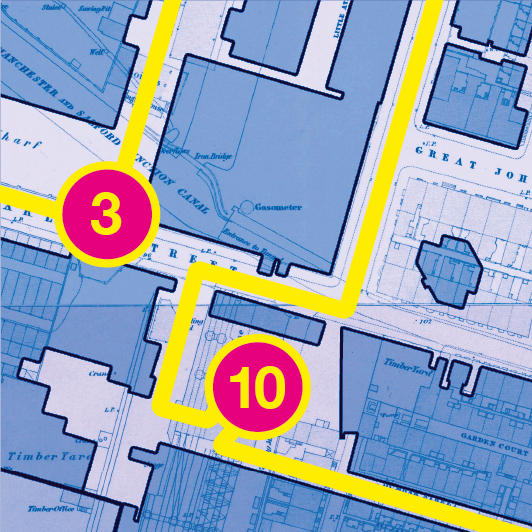
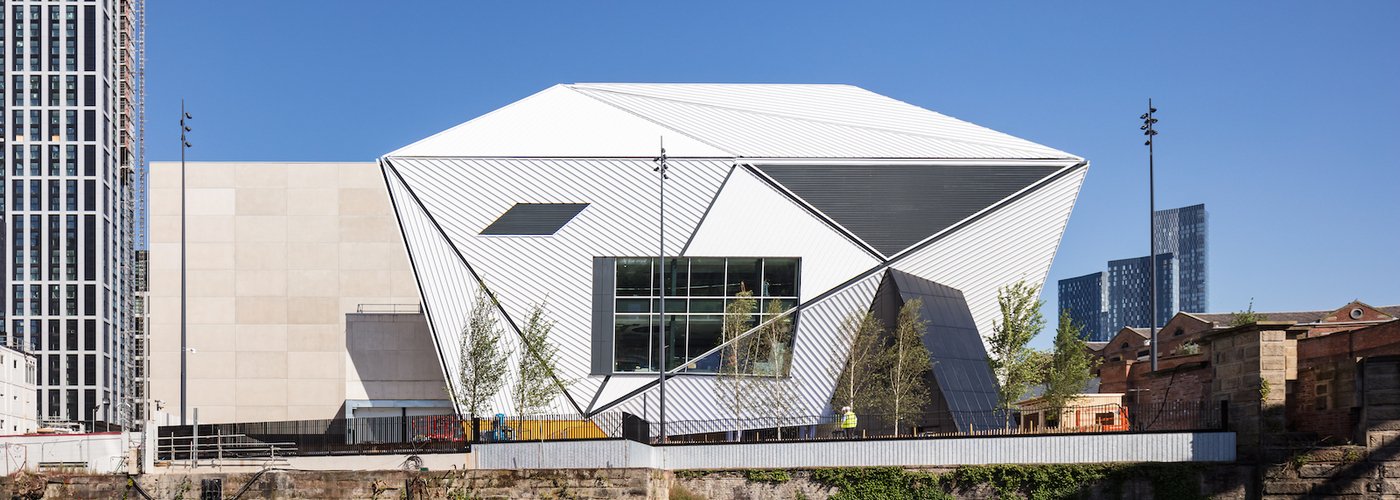
[ OVERVIEW ]Granadaland is a walking tour around one of the most layered and fast-changing parts of Manchester.
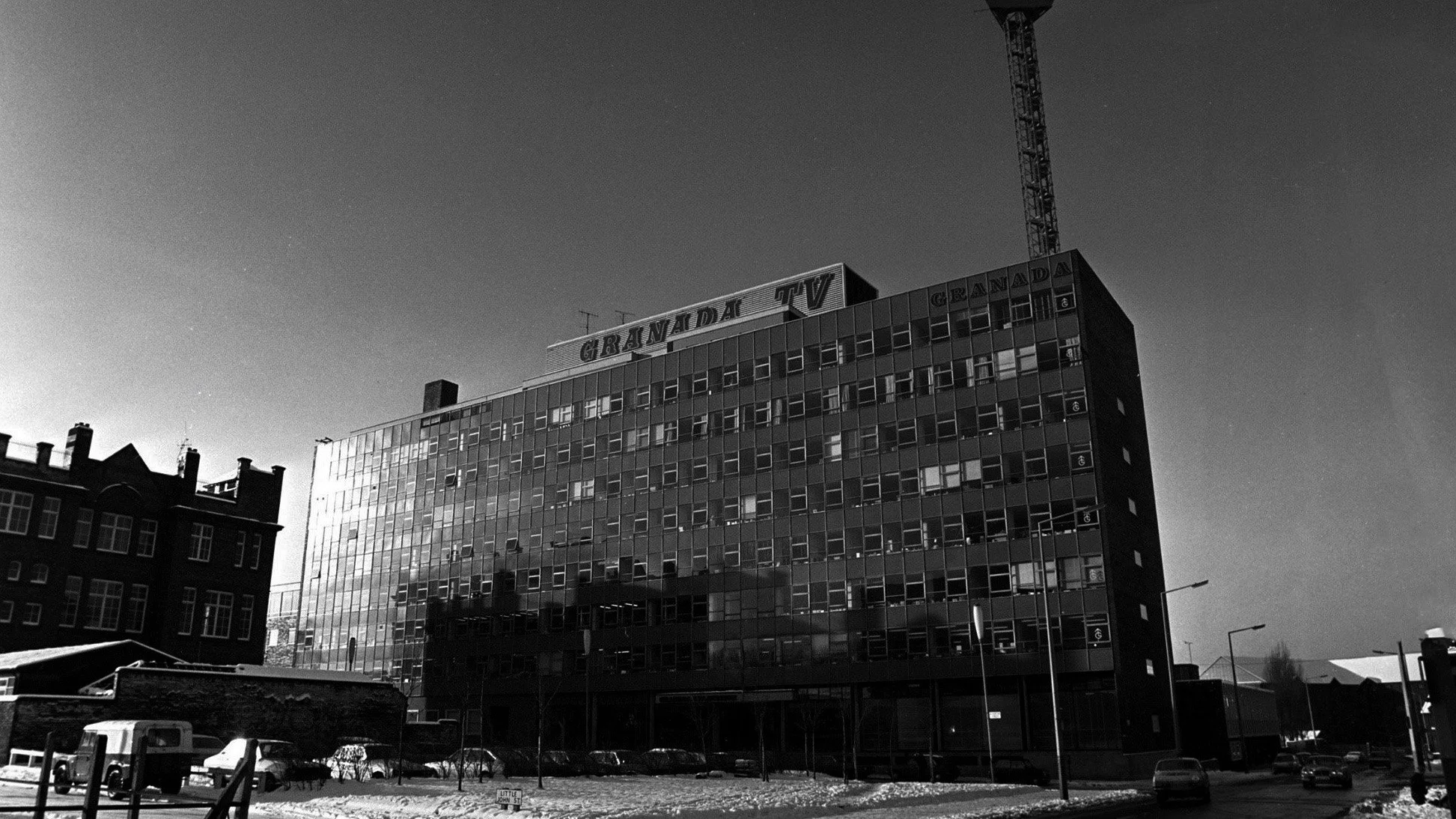
The name comes from Granada Television, whose former Quay Street studios became home to Coronation Street, World in Action, University Challenge, The Beatles’ first television performance, and later the much-loved Granada Studios Tour.
But this is not just a tour about Granada TV.
Like the medieval quarter, Granadaland is about an area - a part of the city where several different versions of Manchester can still be read in the streets, buildings and fragments that remain.
We’ll begin near Aviva Studios, before tracing the story back to the canal age, including the remains of the Manchester and Salford Junction Canal. From there, we’ll move towards the 1830 Liverpool Road Station, now part of the Science and Industry Museum, and look at how canals, railways and warehouses helped transform what had once been the edge of town.
The route then moves into the world of Granada Television: the studios, the office block, the old entrance gates, the former outdoor sets, the story of Coronation Street, and the site of the Granada Studios Tour.
Along the way, we’ll also look at how the area is changing again today, with Aviva Studios, hotels, bars, studios, apartments, offices and cultural spaces creating a new chapter in the life of this part of Manchester.
From canals to railways, warehouses to television studios, theme park to cultural district, Granadaland is a walk through nearly two centuries of reinvention.
Tour Details
Please see our Granadaland Tour Schedule
Next Dates
Tour Duration
2 hours
Pricing
£20 per person
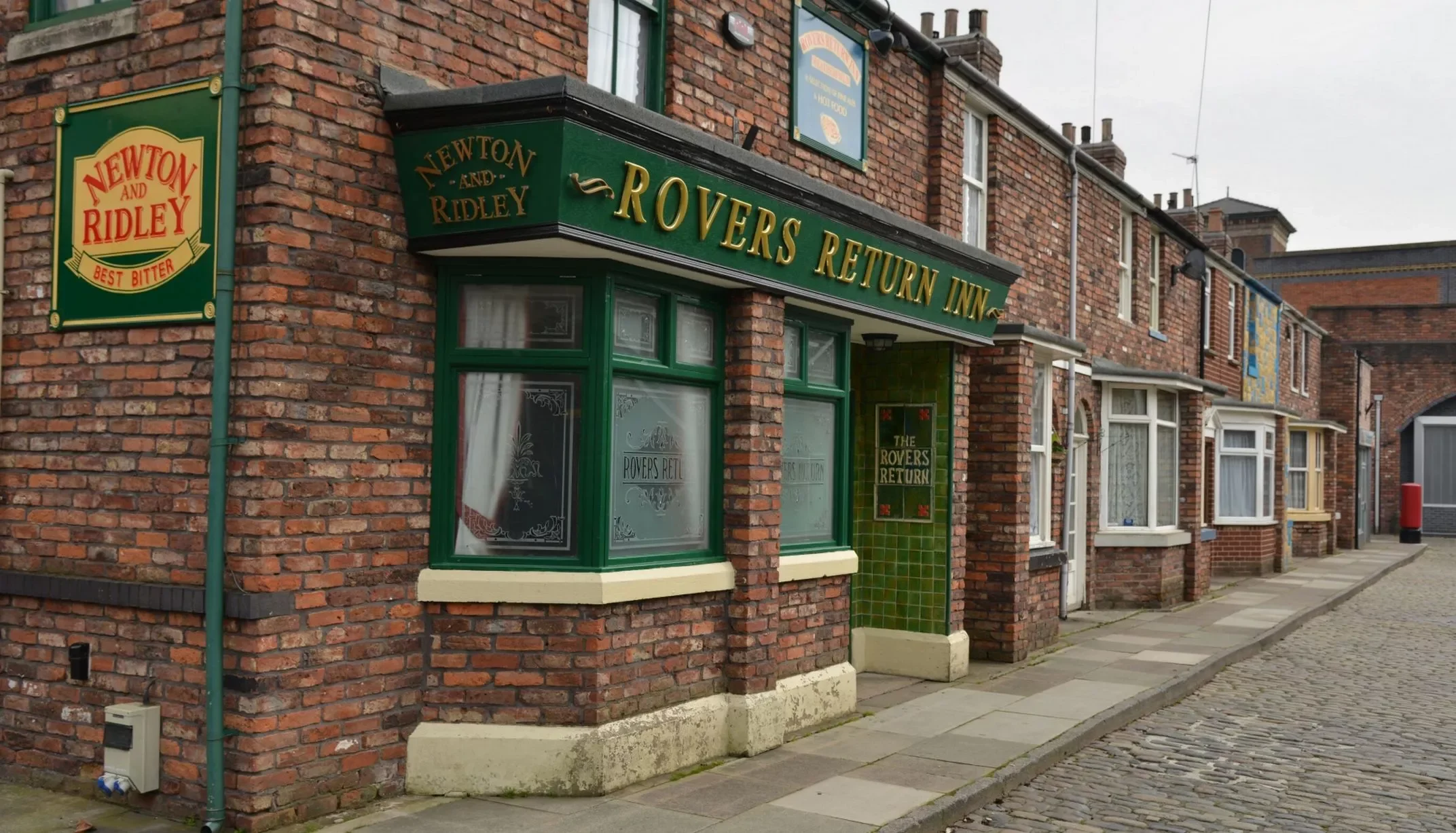
Coronation Street set
Image courtesy of Granadaland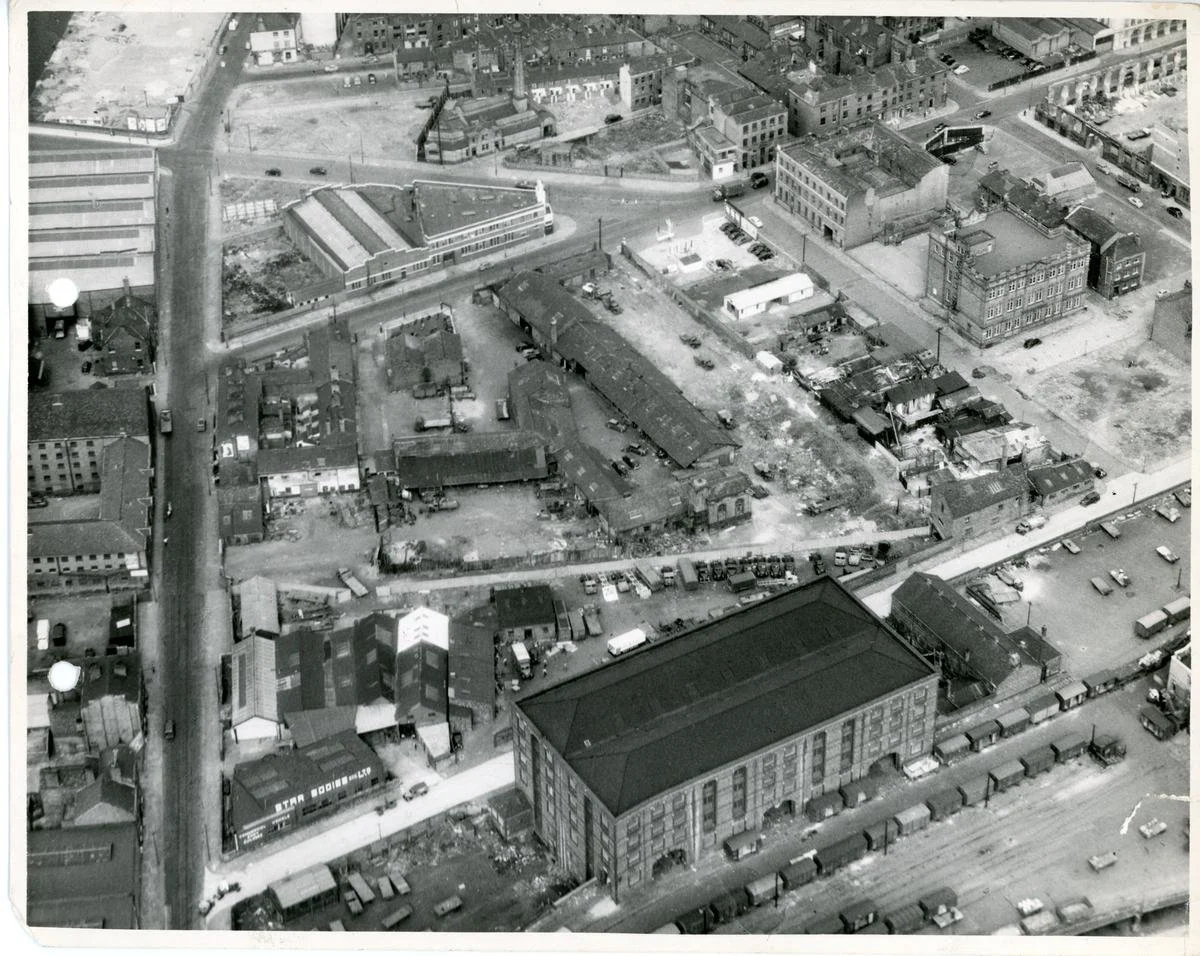
Site of the former studios, Manchester
Image courtesy of the Manchester Library Archives
[ HIGHLIGHTS ]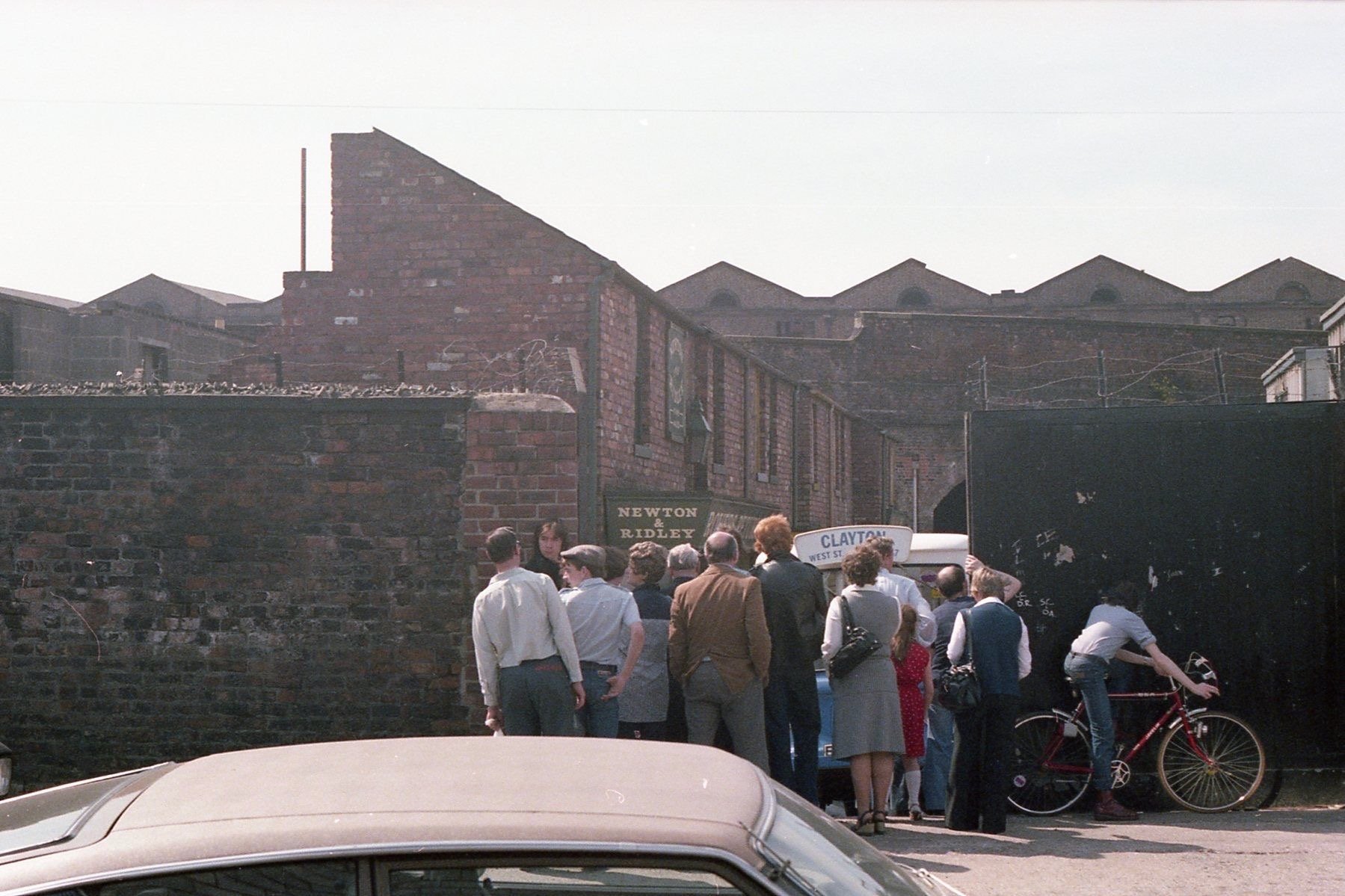
[1]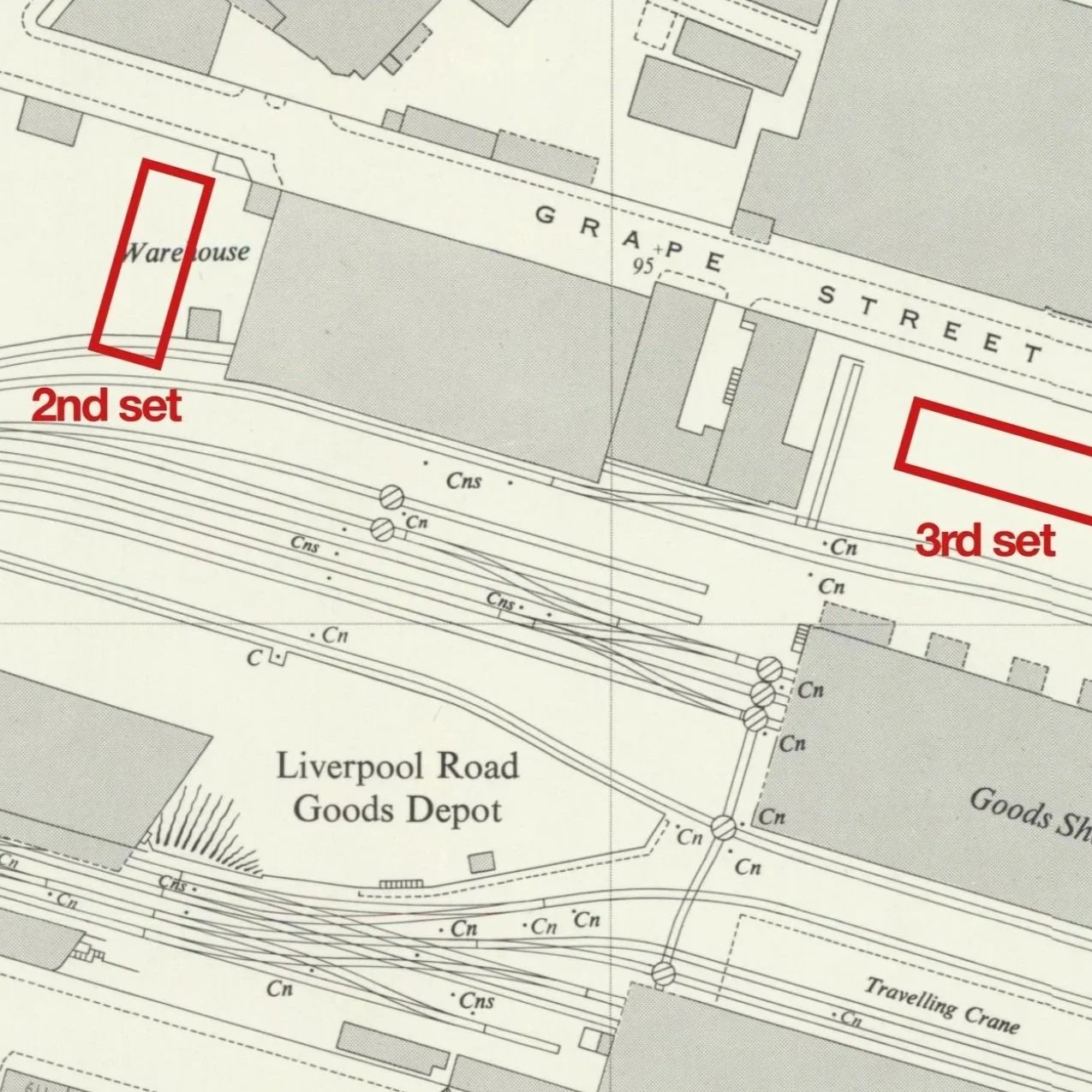
[2]After Granada, entertainment never really left this vibrant part of the city
Manchester & Salford Junction Canal
At the remains of the Manchester and Salford Junction Canal, we find one of the quieter traces of the city’s transport history. Built to link the River Irwell with the Rochdale Canal, it tells the story of an earlier Manchester shaped by water, trade and the movement of goods. Although much of the canal is now hidden, its surviving fragments reveal a time before railways and television studios, when this edge of the city was beginning to be transformed.
Aviva Studios
At Aviva Studios we encounter the newest chapter in the story of this part of Manchester. Home to Factory International, the building has brought large-scale arts, performance and cultural events to the former Granada site, continuing the area’s long association with entertainment and production. Its presence marks another major shift in the district, from industrial infrastructure to television, and now to culture, hospitality and city living.
Liverpool Road Railway Station
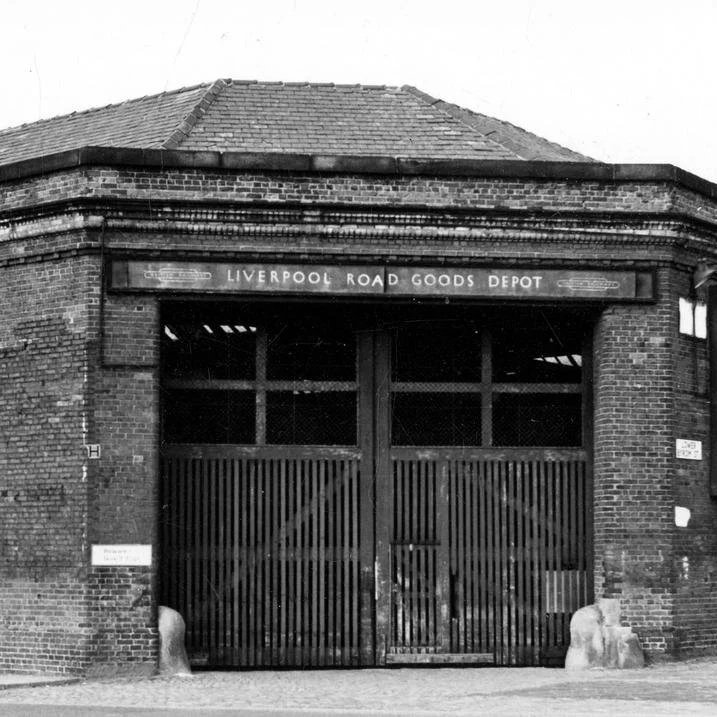
At Liverpool Road Station we encounter the arrival of the railways, a development that dramatically altered the speed and scale of urban life. As the world’s oldest surviving passenger railway station, it represents a moment when Manchester became more tightly connected to the wider region and beyond. The railways cut new lines through the city, reshaping Castlefield into a gateway between old and new forms of transport.
Science & Industry Museum
The former railway buildings now house the Science and Industry Museum, where Manchester’s industrial past is preserved and interpreted. Set within working infrastructure from the railway age, the museum reflects on innovation, manufacturing and experimentation that shaped the city’s global reputation. This stop highlights the shift from active industry to heritage, and how the city chooses to tell its own story.
[3]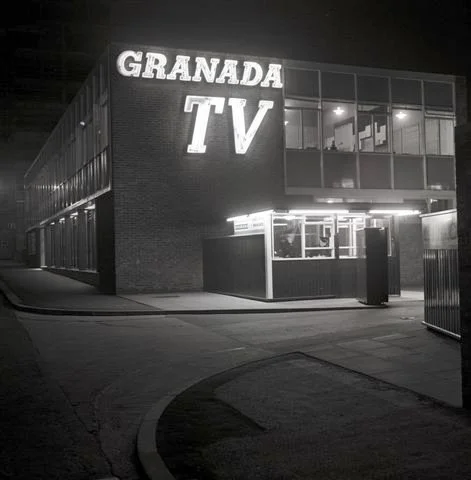
[4]Granada Studios
In the 20th century, St John’s was reinvented once again with the arrival of Granada Studios, introducing broadcasting as a new form of industry. Warehouses and sidings gave way to studios, sets and sound stages, and the area became a place where television programmes were made rather than goods manufactured. Coronation Street and other productions added a cultural layer that transformed how the area was perceived and used.
Grape Street
At Grape Street we follow a route that has repeatedly shifted between public street, industrial backland, television studio estate and visitor attraction. Originally known as Charles Street, it later became part of Granada’s world, forming a key spine through the Granada Studios Tour and connecting visitors with sets, studios, bars and backstage spaces. Recently opened up again, Grape Street now forms part of a new public route through the area, with markets, food, drink and entertainment giving this once-closed part of the city another life.
Meeting Place
■
At the junction of Water Street & Grape Street, just under the covered area of Aviva Studios near the orange ticket office.
Aviva Studios, Water St, Manchester M3 4JQ
Please arrive at least 10 minutes before the start.
-
We’ll start the tour on time, if you’re running a little late, you might find us at the first stopping point at the Manchester and Salford Canal Junction Lock.
-
There won’t be any formal breaks but just over half-way through the tour we’ll be passing by a hotel where there are some toilets… there will be time for a very quick break.
-
We’ll end the tour back at Aviva Studios, where the tour began. The length of the walk is approximately 2km.
What’s nearby
-
![Embracing green spaces while honouring Manchester's industrial past.]()
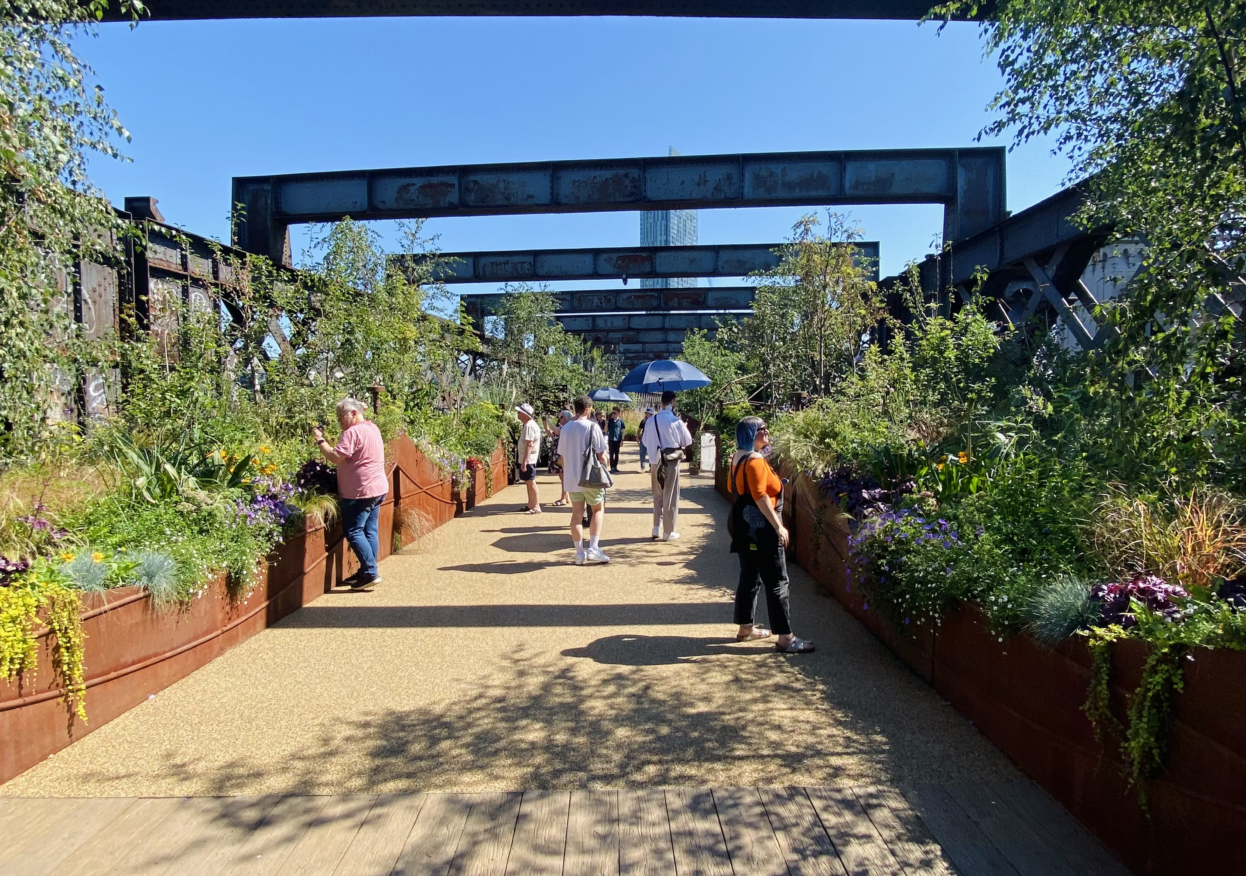
Castlefield Viaduct
This urban park in the sky is a perfect way to explore this prominent viaduct’s heritage, to find out about the city’s long relationship with plants and trees and also learn urban gardening tips.
-
![The Science + Industry Museum building, a modern glass structure with a sign, is adjacent to a historic red brick building, with people walking outside and cars parked nearby under a clear blue sky.]()
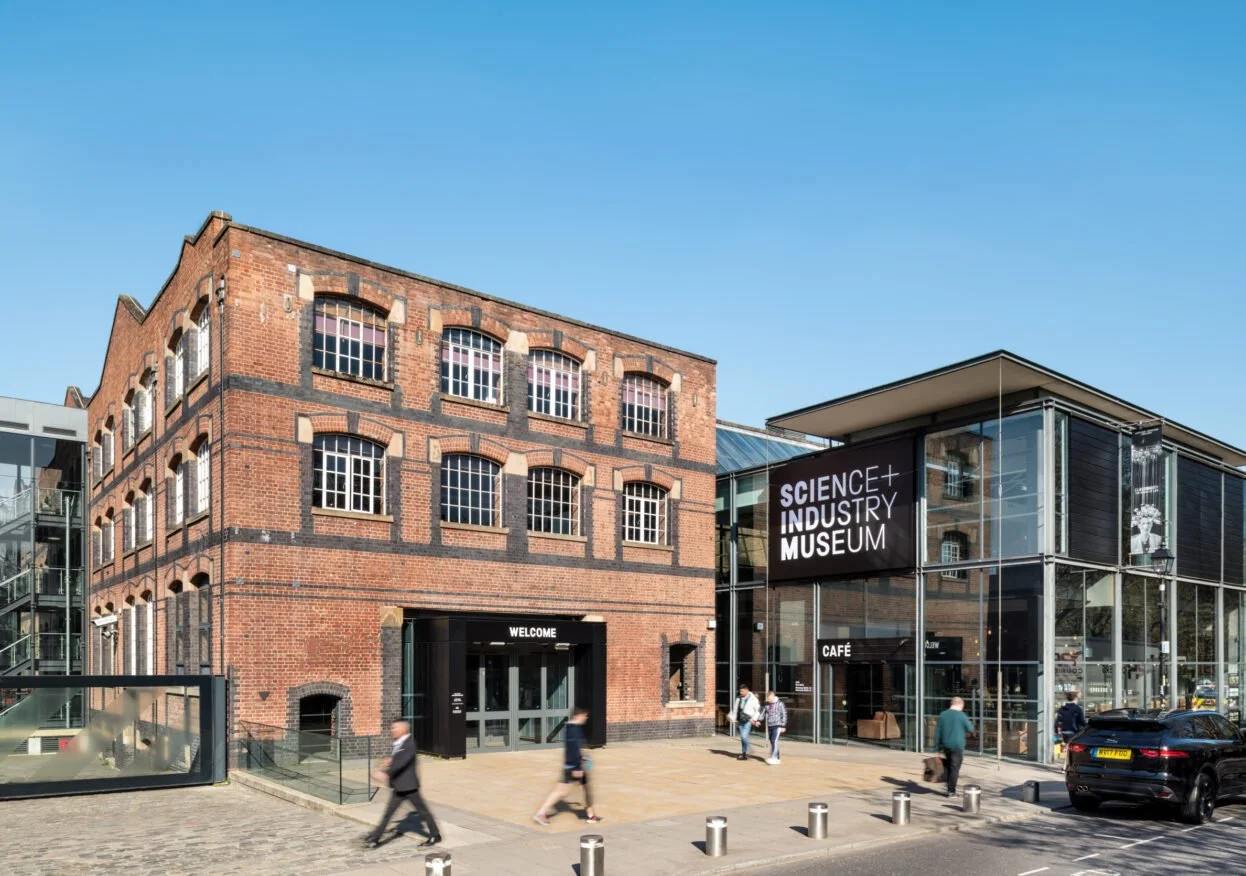
Science & Industry Museum
Dedicated to inspiring visitors through revolutionary, world-changing ideas, the Science and Industry Museum pairs historic sites with a dynamic, contemporary science programme.
-
![Campfield is open weekdays for workspaces, café, events and accelerator activity – plus craft markets, food stalls and public gatherings on weekends.]()
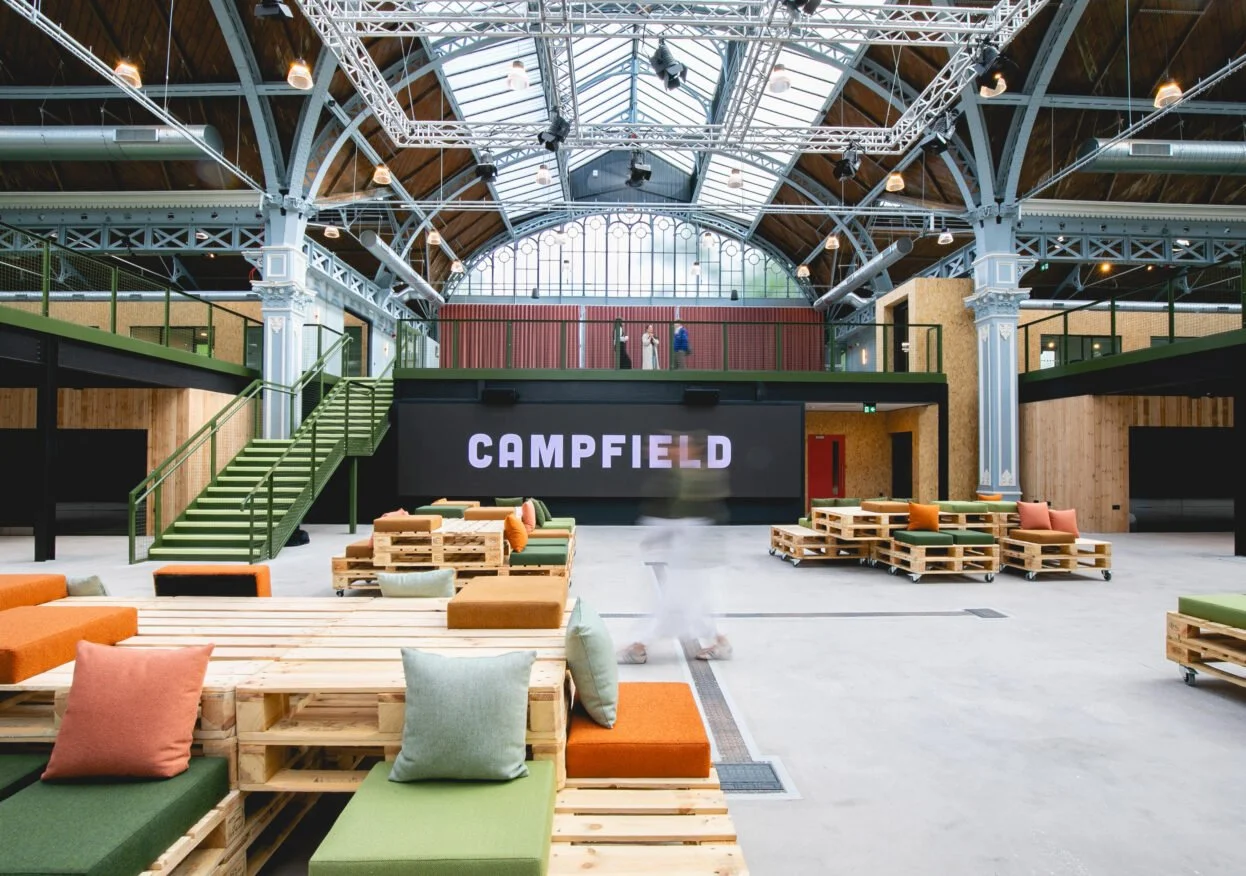
Campfield Market Hall
Having undergone years of transformative and restorative work, the complex will now be known as Campfield Mega Campus, Manchester’s most ambitious creative-tech destination.
-
![An art gallery with various paintings on the wall and two large sculptures on pedestals, with a large window letting in natural light.]()
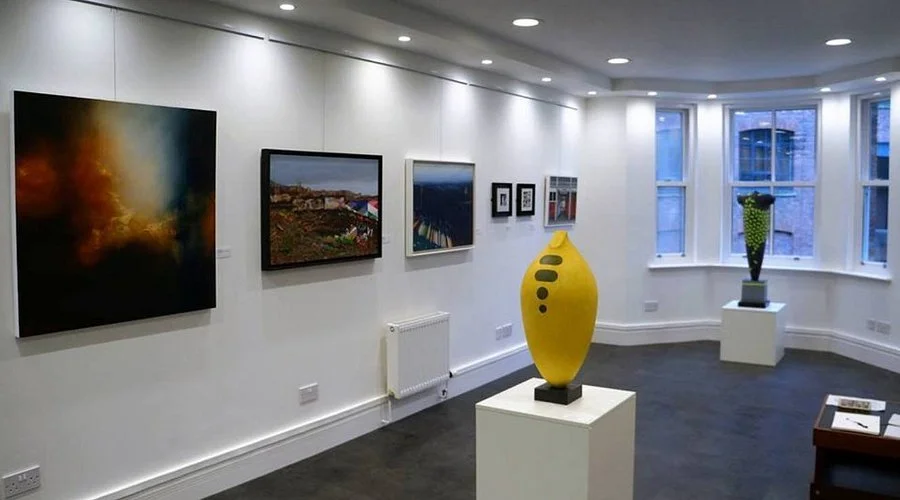
Saul Hay Gallery
Saul Hay Gallery, located one of Castlefield’s Victorian red brick buildings, is one of Manchester’s most important commercial galleries.
-
![The Aviva Studios with its geometric design, large windows, and metal exterior, surrounded by smaller structures and urban environment.]()
Aviva Studios
Factory International at Aviva Studios is a world-class cultural space in the heart of Manchester, building on the success of MIF.