an introduction to
Manchester
upcoming tours…
[ OVERVIEW ]This Manchester walking tour is a thoughtful introduction to the city and the forces that shaped it. Over 2 hours, you’ll meander through the backbone of Manchester city centre, weaving from controversial modern interventions and bold civic spaces back through earlier layers of the city’s history.
Along the way, the tour explores how faith, music, trade, growth, protest, and reinvention have all left their mark on Manchester.
Using historic photographs, maps, and on-site observation, the walk reveals how confidence and conflict have repeatedly driven change… from industrial expansion and global trade to bombing, rebuilding, and a constantly evolving skyline.
This is a relaxed, conversational city-centre walk rather than a lecture. Designed for first-time visitors and curious locals alike, it provides context, stories, and a deeper understanding of how Manchester became the city it is today. The tour finishes centrally, leaving you well oriented and ready to explore further.
Tour Details
Pricing
£20 per person
Please see our Introduction to Manchester Tour Schedule
Next Dates
Tour Duration
2 hours
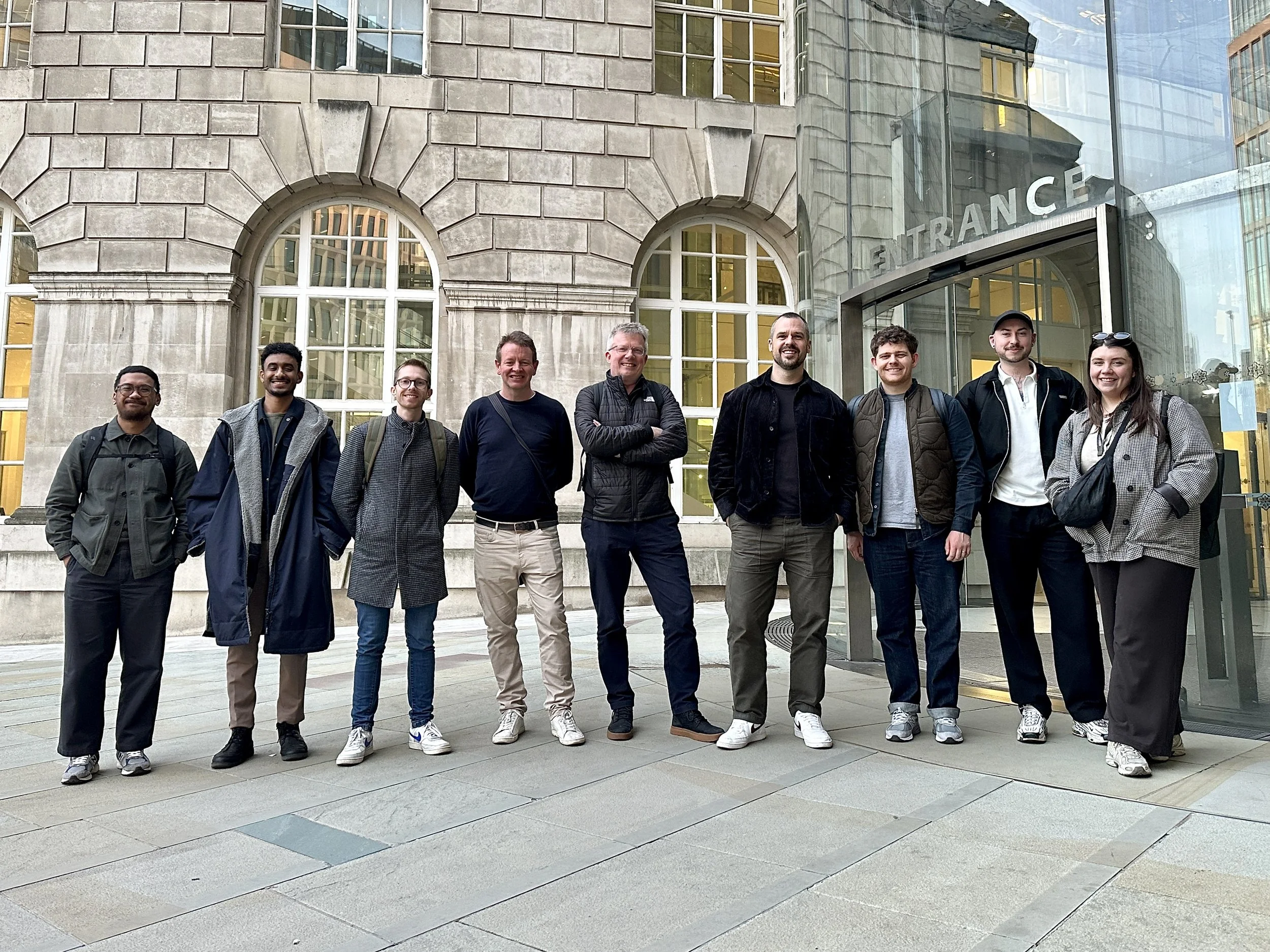
outside Central Library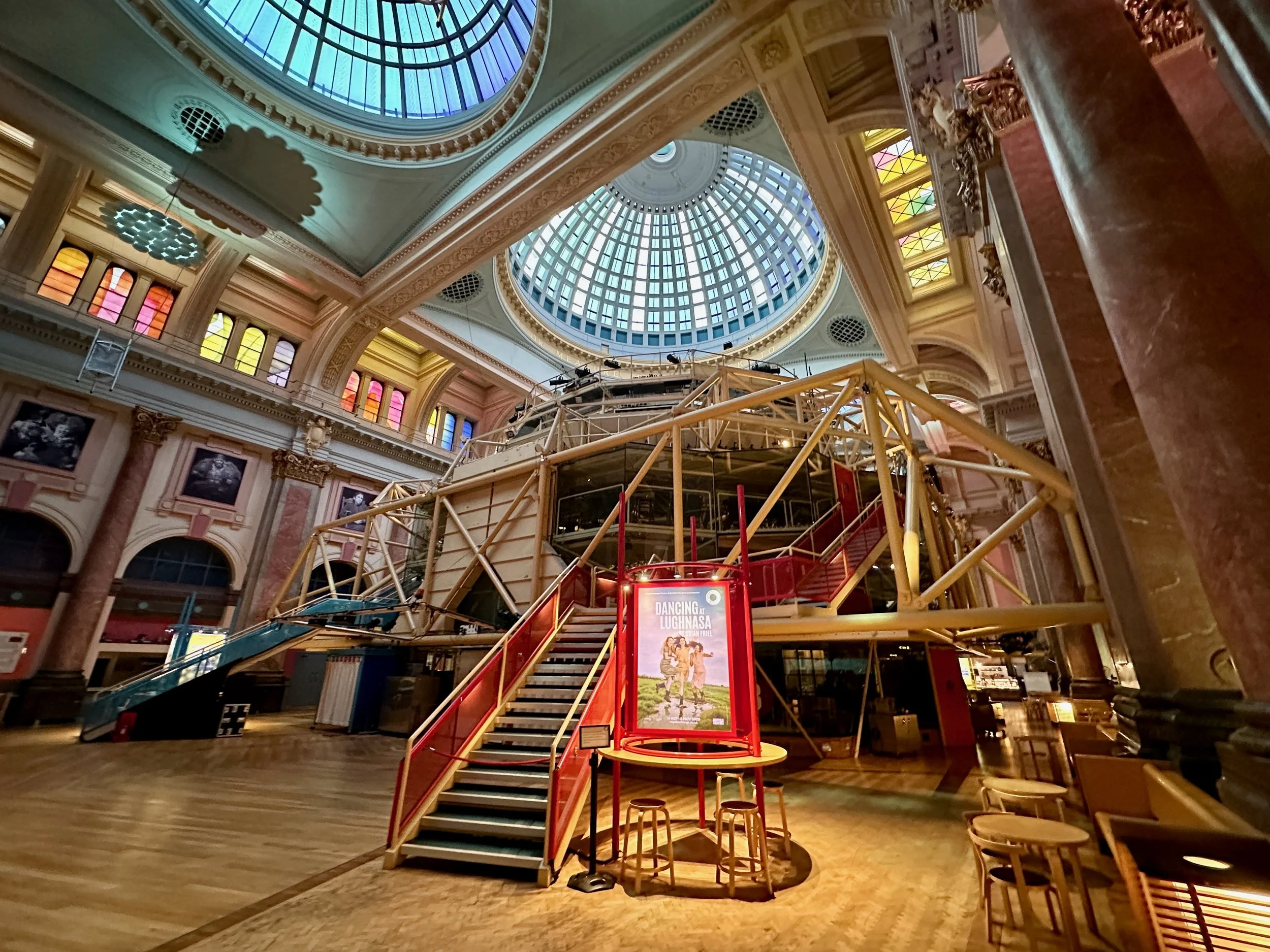
The Royal Exchange[ HIGHLIGHTS ]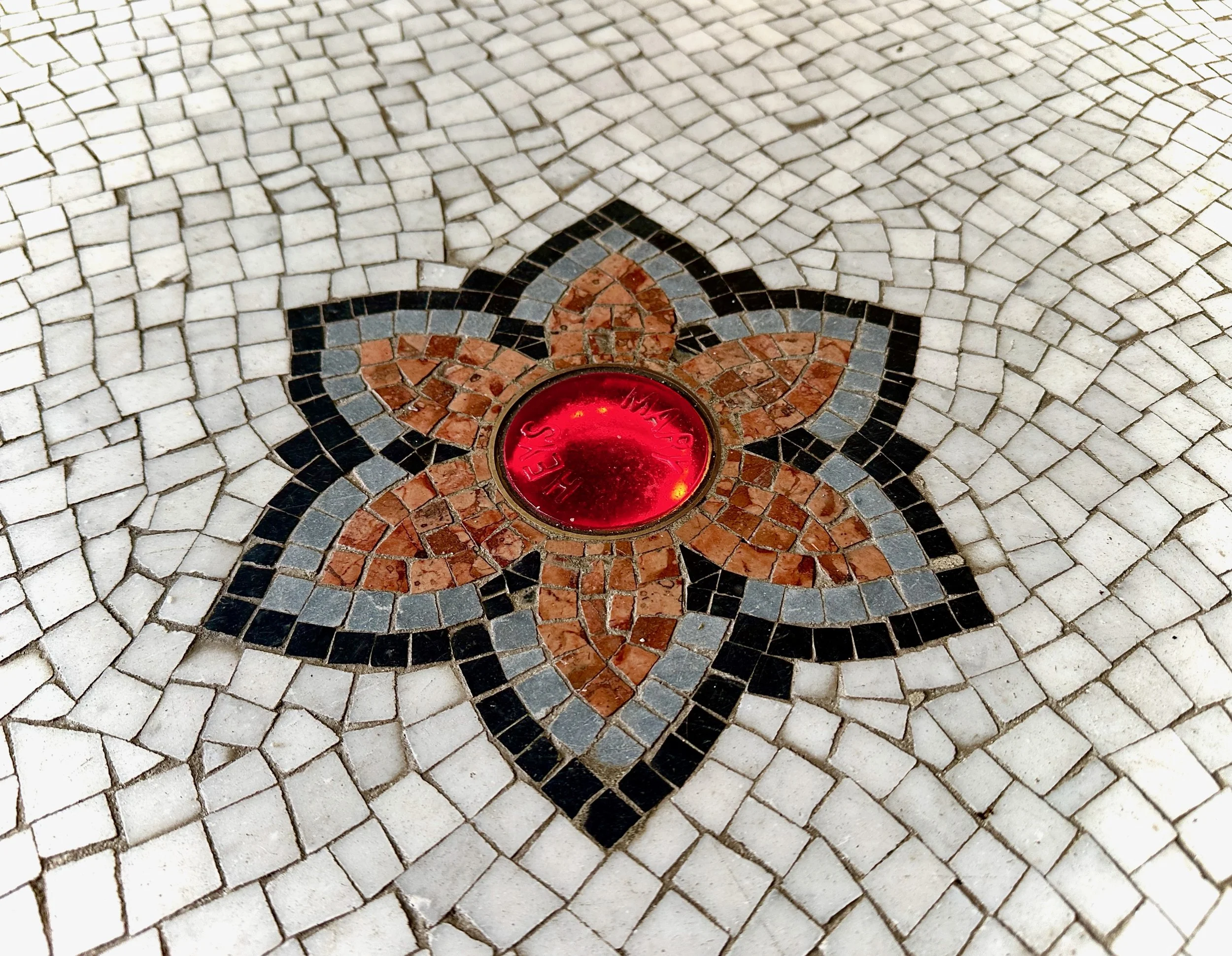
[1]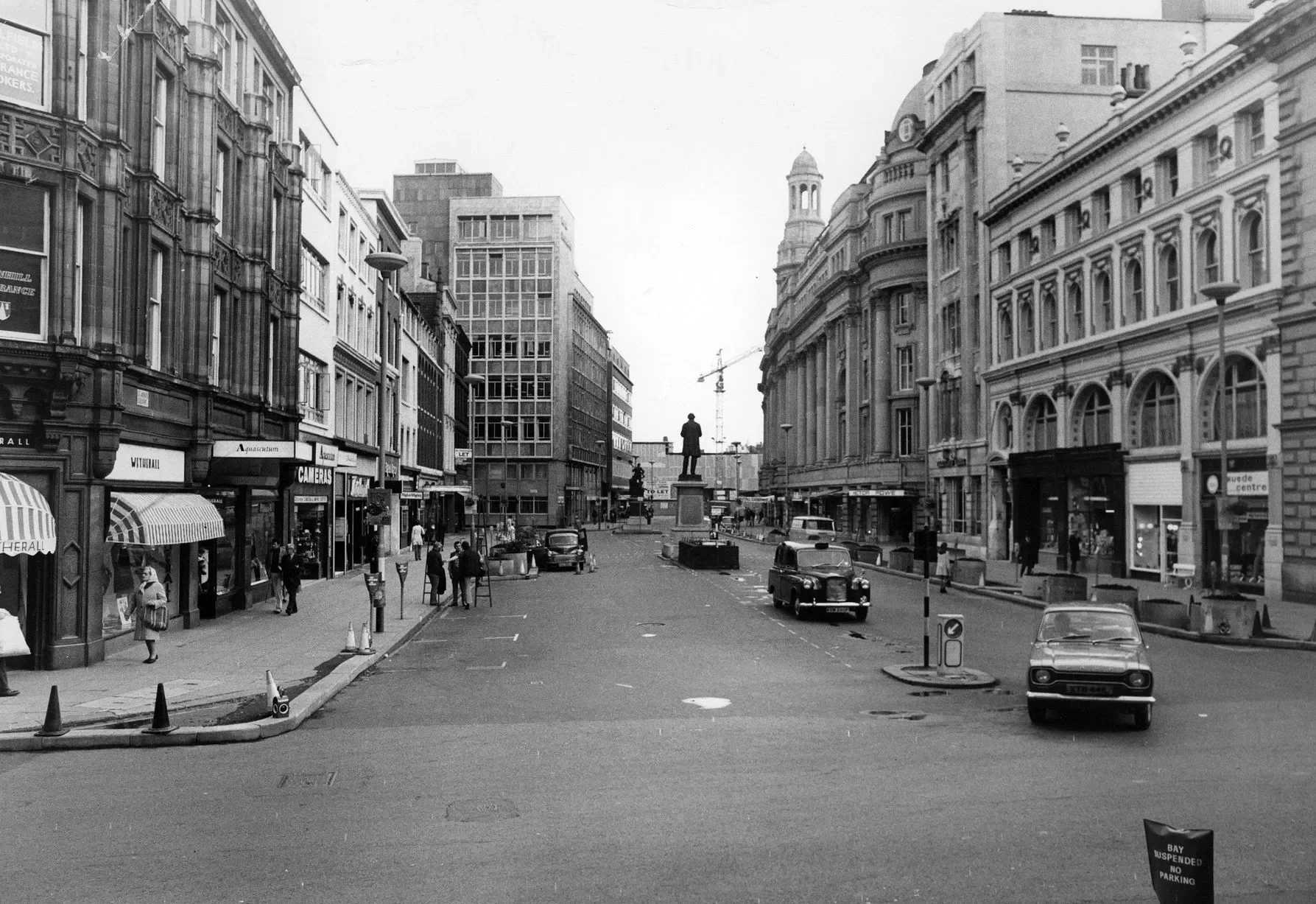
[2]A clear introduction to Manchester’s story
Library Walk
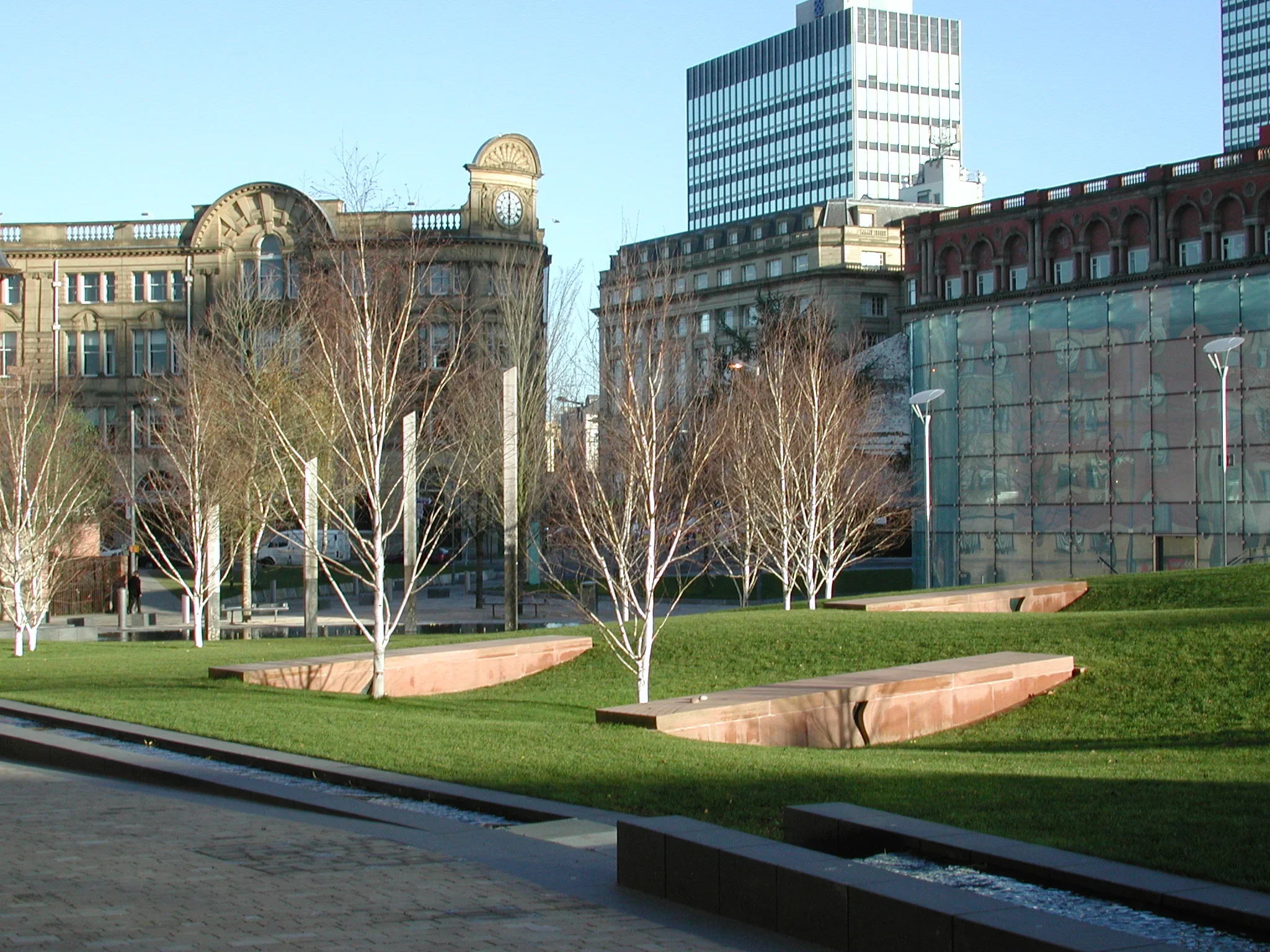
Marketed as a new civic route linking culture and learning, Library Walk has also become a lightning rod for debate about public space, access, and who the city is really designed for. Created alongside the redevelopment of St Peter’s Square, it sliced through long-established routes and raised questions about ownership, security, and exclusion in what appears to be an open street. We’ll start here to unpack the controversy, looking beyond the paving and planting to ask how power, design, and control shape the everyday experience of the city centre.
The Royal Exchange
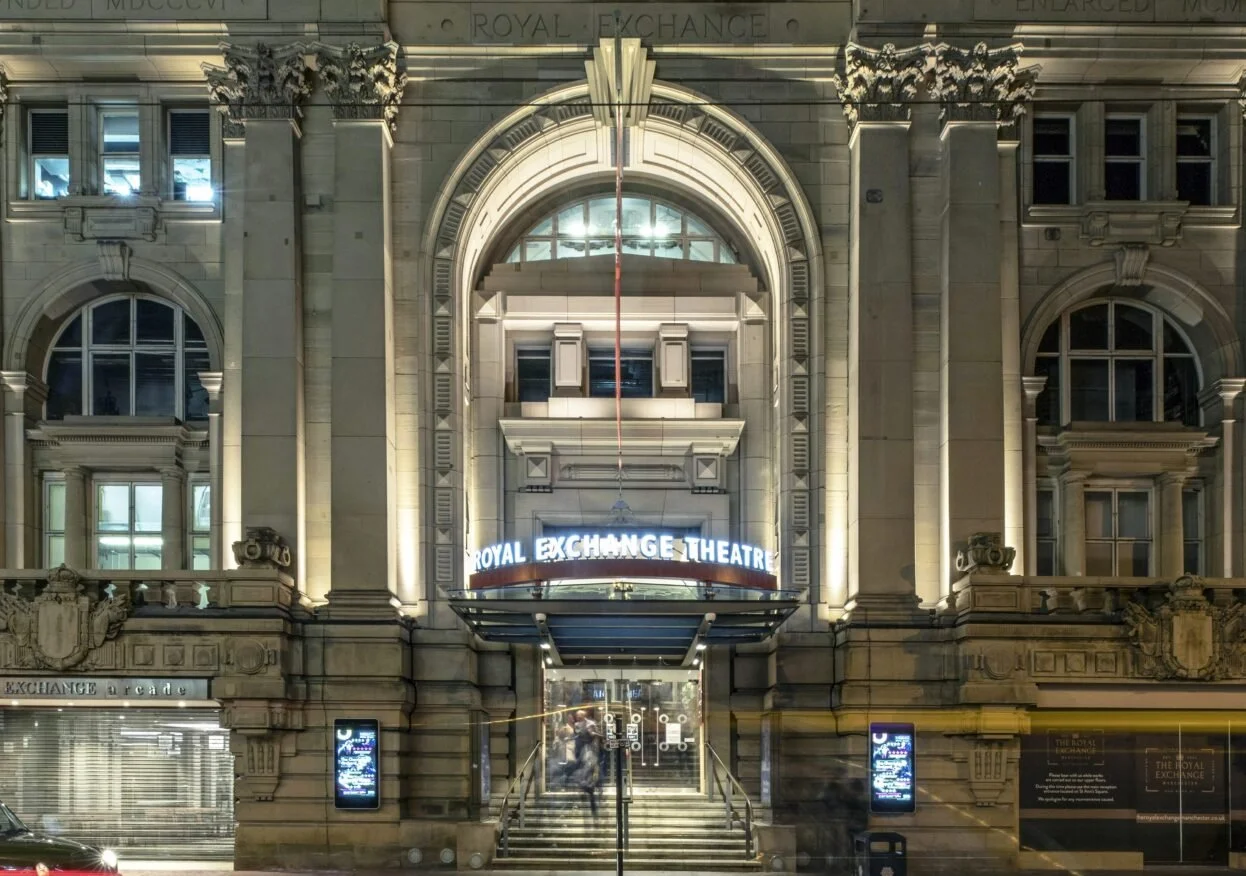
What most people don’t realise is that the Royal Exchange we see today is just the latest in a series of exchanges. The very first was built in 1729 in Market Place. By 1809 the Exchange had moved here, and two more rebuilds followed as the cotton trade exploded. The present building, opened in 1921, was once described as the “largest room in the world,” where up to 11,000 merchants gathered to set prices that shaped global markets. Today it serves a very different purpose, but it’s easy to imagine the roar of voices and the hustle of deal-making that once filled the hall.
Manchester Town Hall
Designed to project civic confidence and moral authority, Manchester Town Hall was never intended to be neutral. Built at the height of industrial wealth, its Gothic grandeur told a very deliberate story about power, progress, and who ran the city. We’ll look past the stone carvings and murals to examine how architecture was used as propaganda, how decisions made here reshaped working lives across Manchester, and why the building still provokes debate about governance, cost, and civic pride today.
St Ann’s
Long seen as a place of calm amid the city’s commercial core, St Ann’s Churchyard has also been a stage for protest, planning battles, and shifting ideas of public use. From political rallies to Occupy camps, this small square has repeatedly tested how much dissent the city will tolerate in its most visible spaces. We’ll explore how a Georgian churchyard became contested ground, revealing tensions between heritage, commerce, and the right to gather in Manchester’s historic heart.
[3]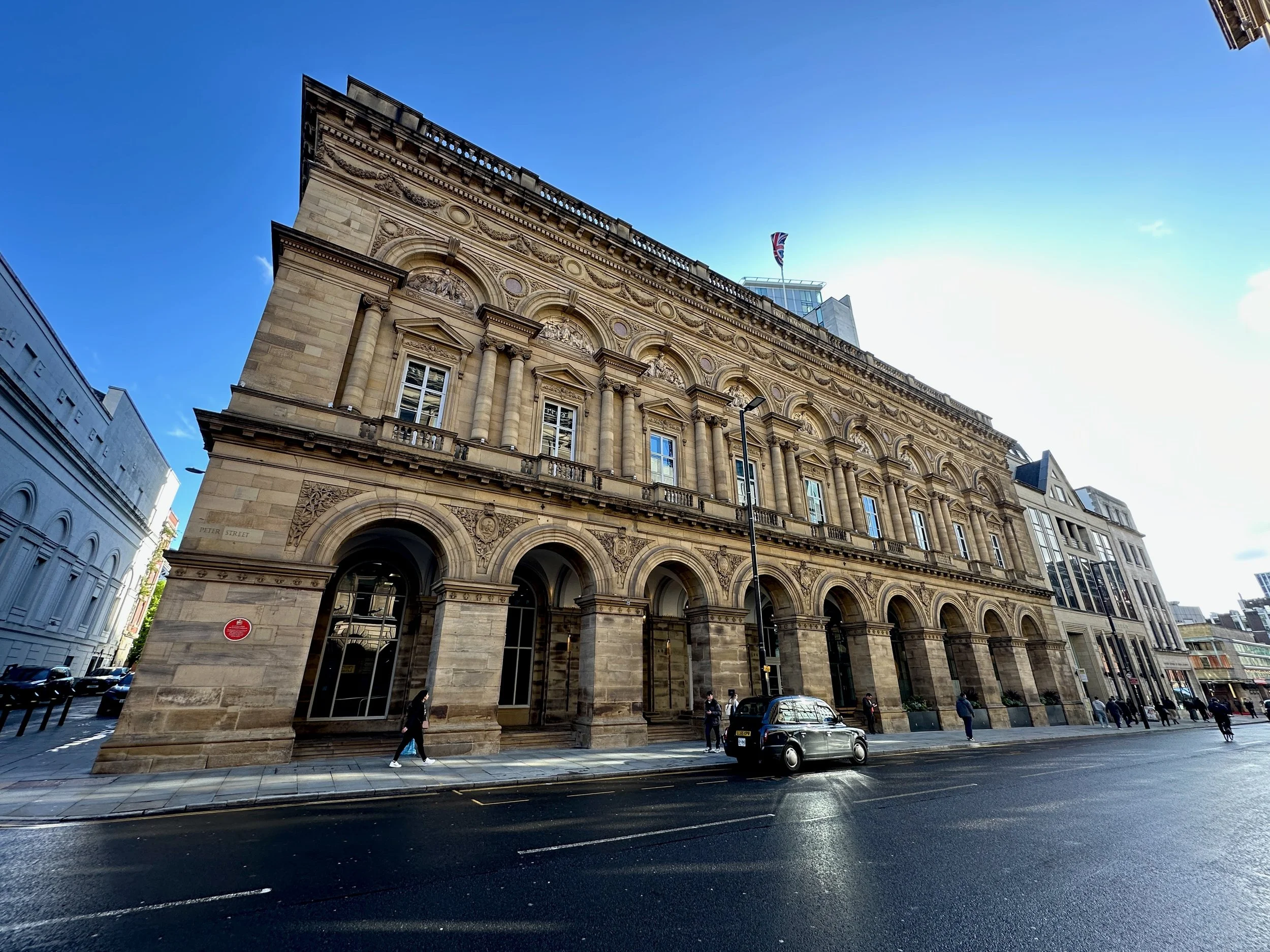
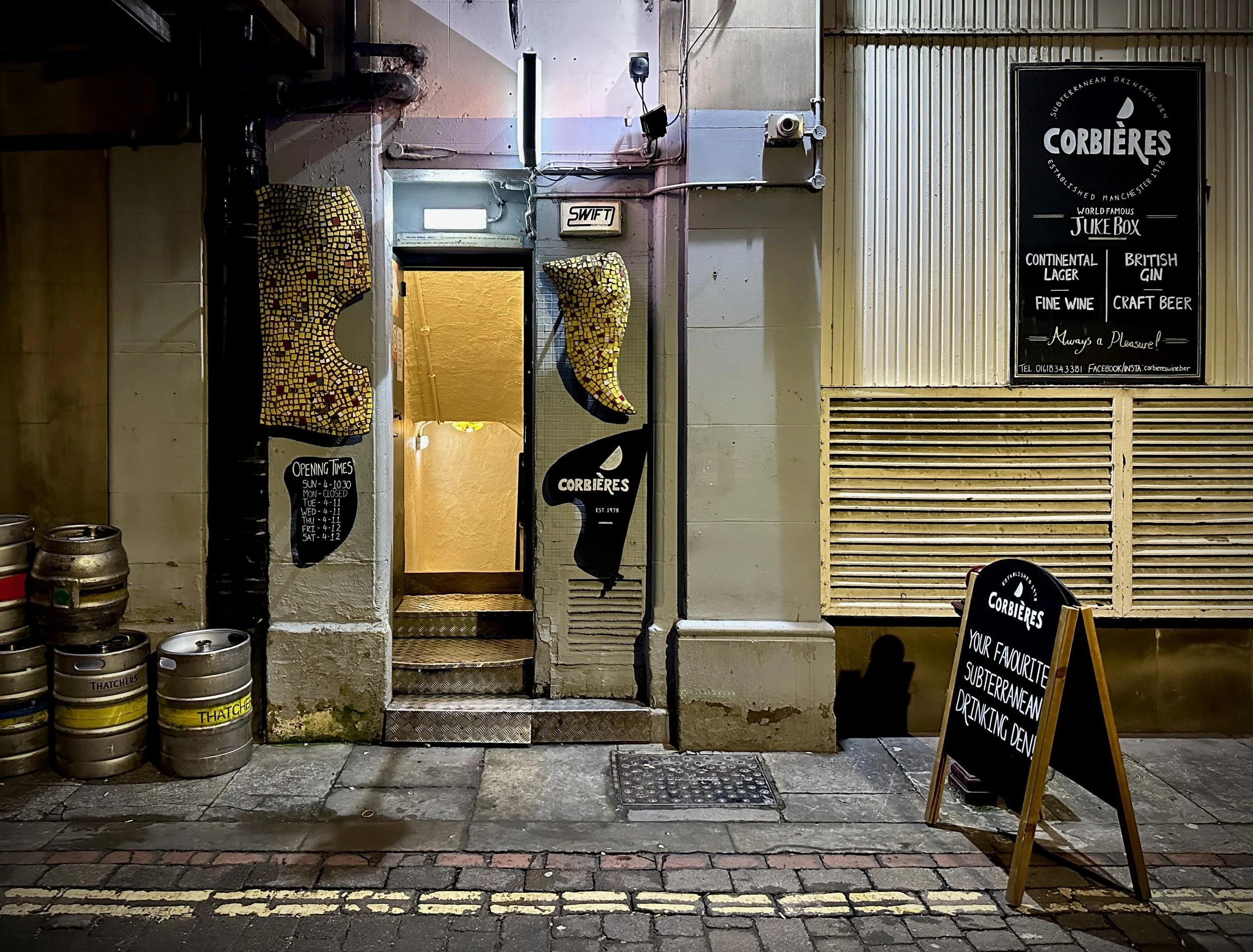
[4]Corbières
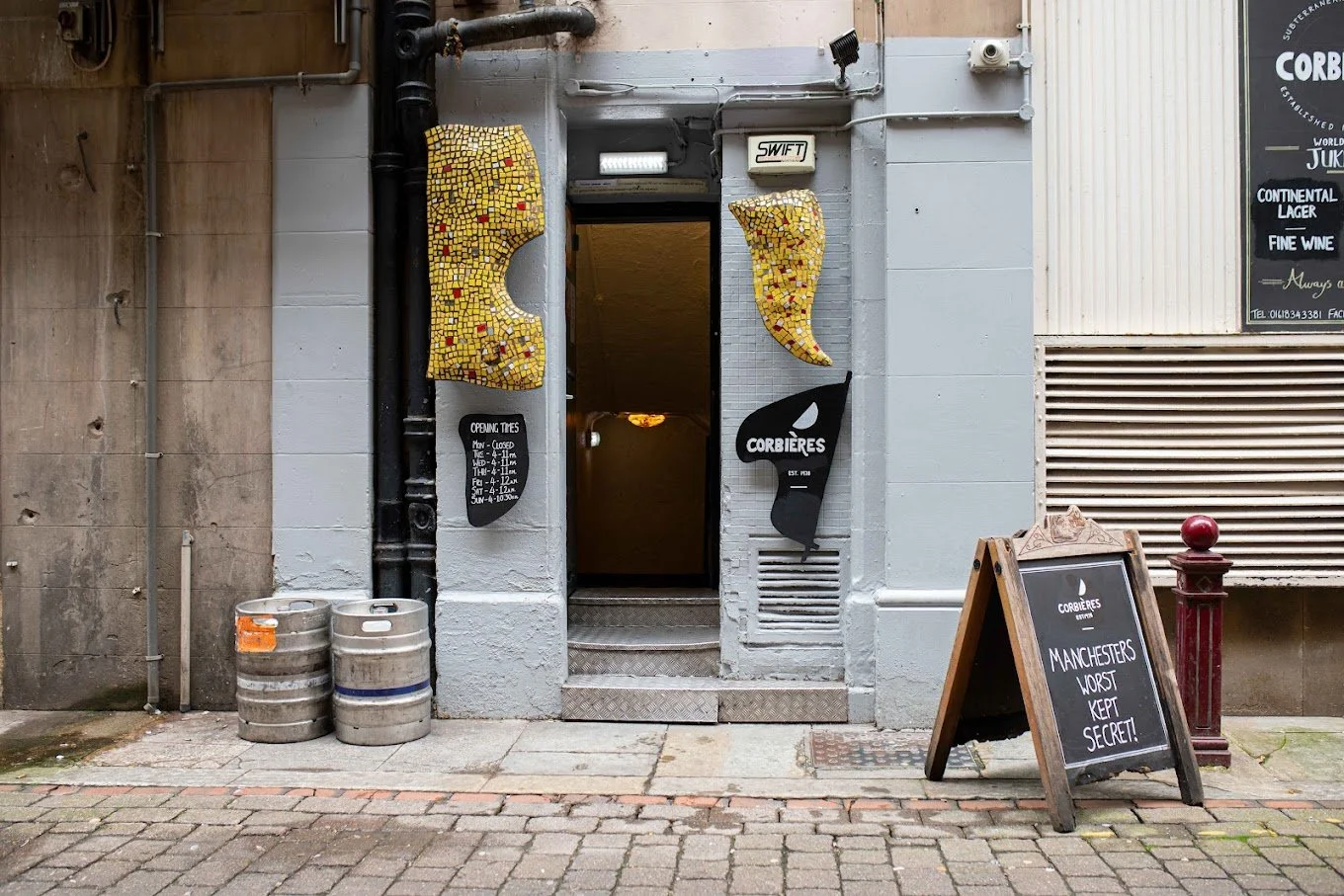
Corbière’s is one of Manchester’s longest-running bars, open since 1978 and still tucked away below street level, with its infamous jukebox as much a part of its character as the drinks. Once a haunt for live music as well as late nights, it sits neatly in the story of Manchester’s music scene. From the Sex Pistols gigs at the Lesser Free Trade Hall in 1976 to the rise of Factory Records and the bands they inspired, Corbière’s feels like part of that same city soundtrack: scruffy, storied, and still going.
Free Trade Hall
Built on the site of the Peterloo Massacre, the Free Trade Hall carries several layers of Manchester’s history in one place. We’ll begin the tour here by looking at what happened on this ground in 1819, what stood here before, and how the hall came to be built as a powerful political statement. From protest and reform to music and counterculture, its story returns later in the tour through Bob Dylan, the famous “Judas” heckle, and the Sex Pistols gig that helped reshape the city’s musical identity.
Meeting Place
■
Outside the front of The Edwardian Manchester hotel
the former Free Trade Hall,
Peter Street, Manchester, M2 5GP
We’ll meet on the corner of Peter Street & Southmill Street - your guide will have a small yellow flag and will be clearly identifiable.
-
We’ll start the tour on time, if you’re running a little late, you might find us at the first stopping point on Bootle Street just at the side of Friend’s Meeting House… we then move on to St Peter’s Square, outside Central Library.
-
There won’t be any formal breaks but just over two-thirds through the tour we’ll be passing by The Royal Exchange where there are some toilets… there will be time for a very quick break.
-
We’ll end the tour at the Royal Exchange. The length of the walk is just under 2km.
What’s nearby
-
![Facade of a restaurant entrance with mosaic-tile sculptures on the wall, a black chalkboard sign on the sidewalk reading "Manchester's Worst Kept Secret!" and barrels outside.]()
Corbières
A basement bar hidden away in a side street off St Anns Square, it first opened in 1978, and is the self-proclaimed ‘worst kept secret’ in the city?
-
![The Royal Exchange Theatre is one of the stopping places on our walking tour of the Medieval Quarter of Manchester.]()
Royal Exchange Theatre
The Royal Exchange is one of the most celebrated theatres in the country, highly regarded for both new writing and its take on the classics.
-
![Chetham’s in Manchester is the oldest surviving public library in the country – and the esteemed ancestor of Central Library.]()
Chetham’s Library
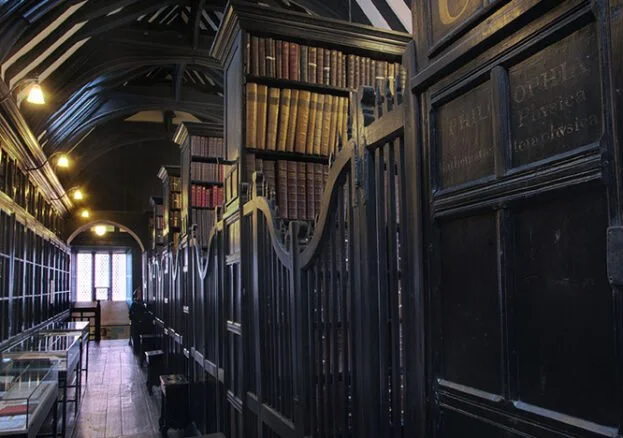
Chetham’s Library is one of the must-sees of any visit to Manchester. The library was founded in 1653, and is the oldest public library in the world – but the building dates back even further, to 1421.
-
![Mowgli offer some great Indian street food in The Corn Exchange that we'll pass through on our walk.]()
Mowgli Street Food
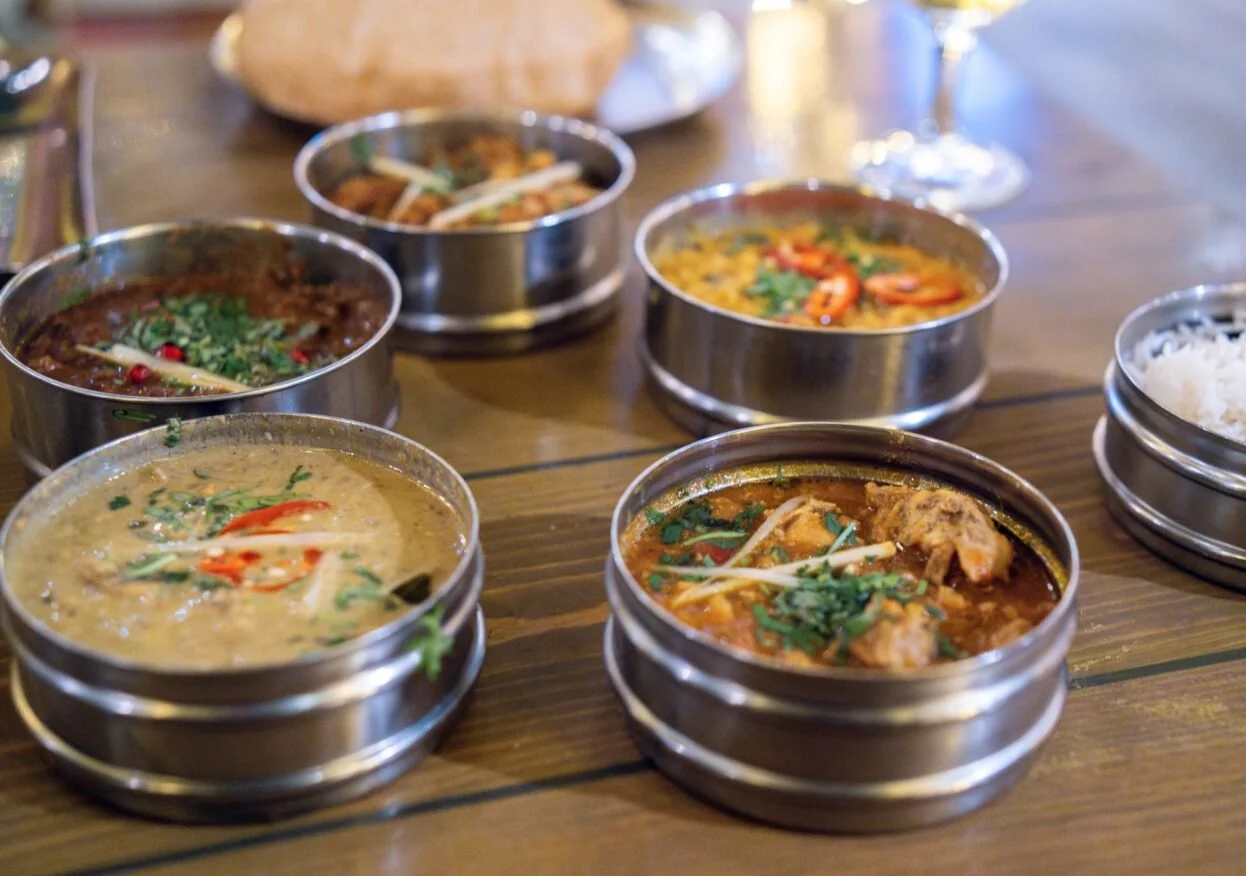
The brainchild of cookbook writer and curry evangelist Nisha Katona, Mowgli brings authentic Indian street food to Manchester’s Corn Exchange.
-
![Cathedral Gardens is one of few green spaces in Manchester.]()
Cathedral Gardens
Cathedral Gardens is a partially lawned public space in Manchester city centre, located between Manchester Cathedral and the National Football Museum.