Manchester’s Last Industrial Chimneys
How many industrial chimneys are left in Manchester city centre?
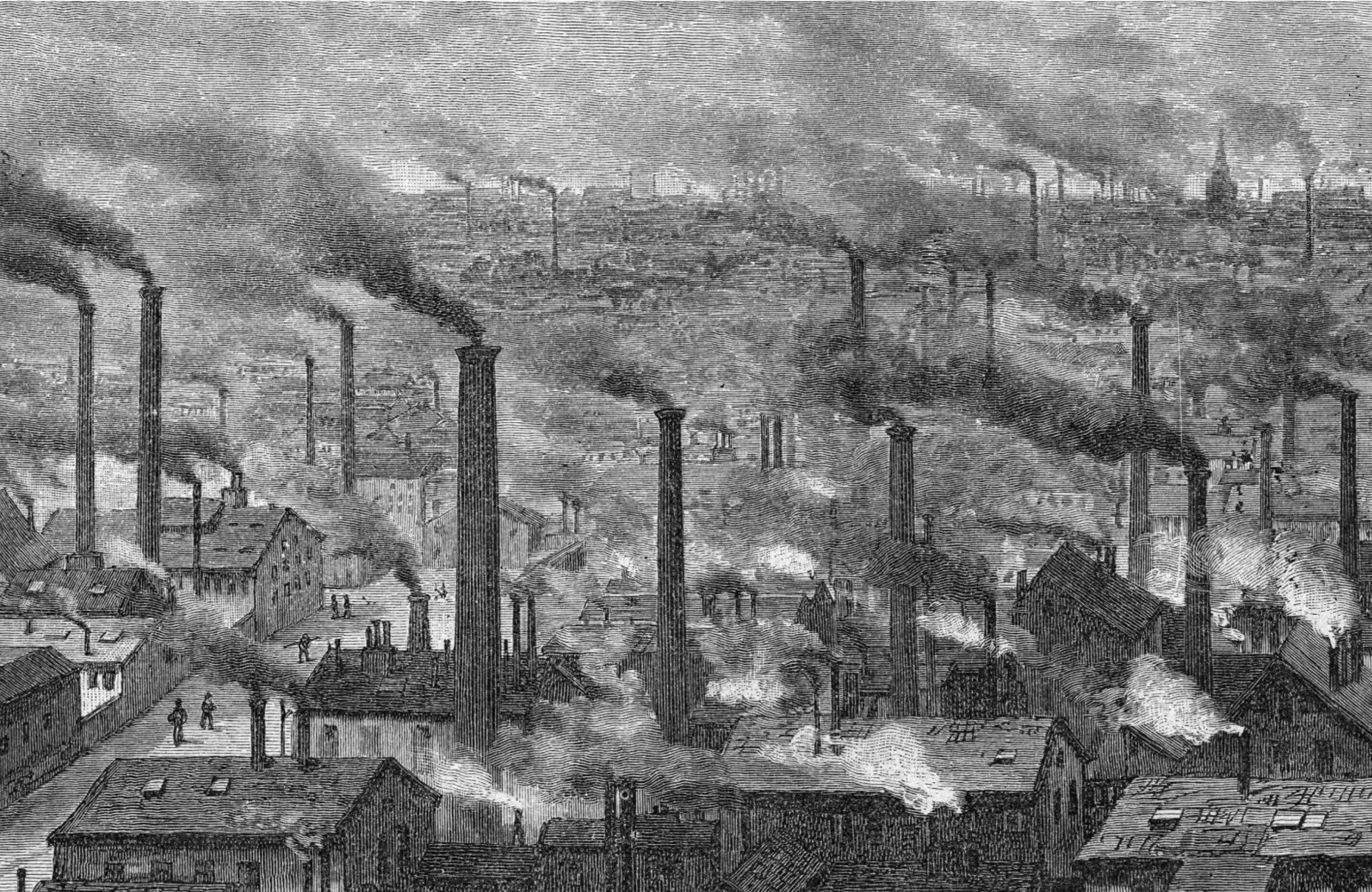
Manchester’s skyline was once a forest of them.
One often-cited estimate says the number of cotton mills in Manchester rose from just two in 1790 to 66 by 1821. Steam-powered machinery allowed mills and factories to grow larger and more productive, but every new engine required boilers, fuelled primarily by coal, and chimneys to carry away the smoke.
By the mid-1840s, around 500 industrial chimneys were smoking above Manchester. By the end of the century, there were almost 2,000 across Manchester and Salford.
Many belonged to cotton mills, but others served rubber works, corn mills, breweries, engineering works and, later, electricity stations. Coal smoke and soot hung over the streets, blackening brick and stone, dirtying clothes and homes, and contributing to Manchester’s notorious smog.
The smoke was damaging to people’s health, but it was also widely regarded as evidence of a successful and prosperous city. For mill owners, smoking chimneys represented production and profit; for thousands of workers, they represented employment. Manchester’s first smoke-abatement organisation, the Manchester Association for the Prevention of Smoke, was established as early as 1842.
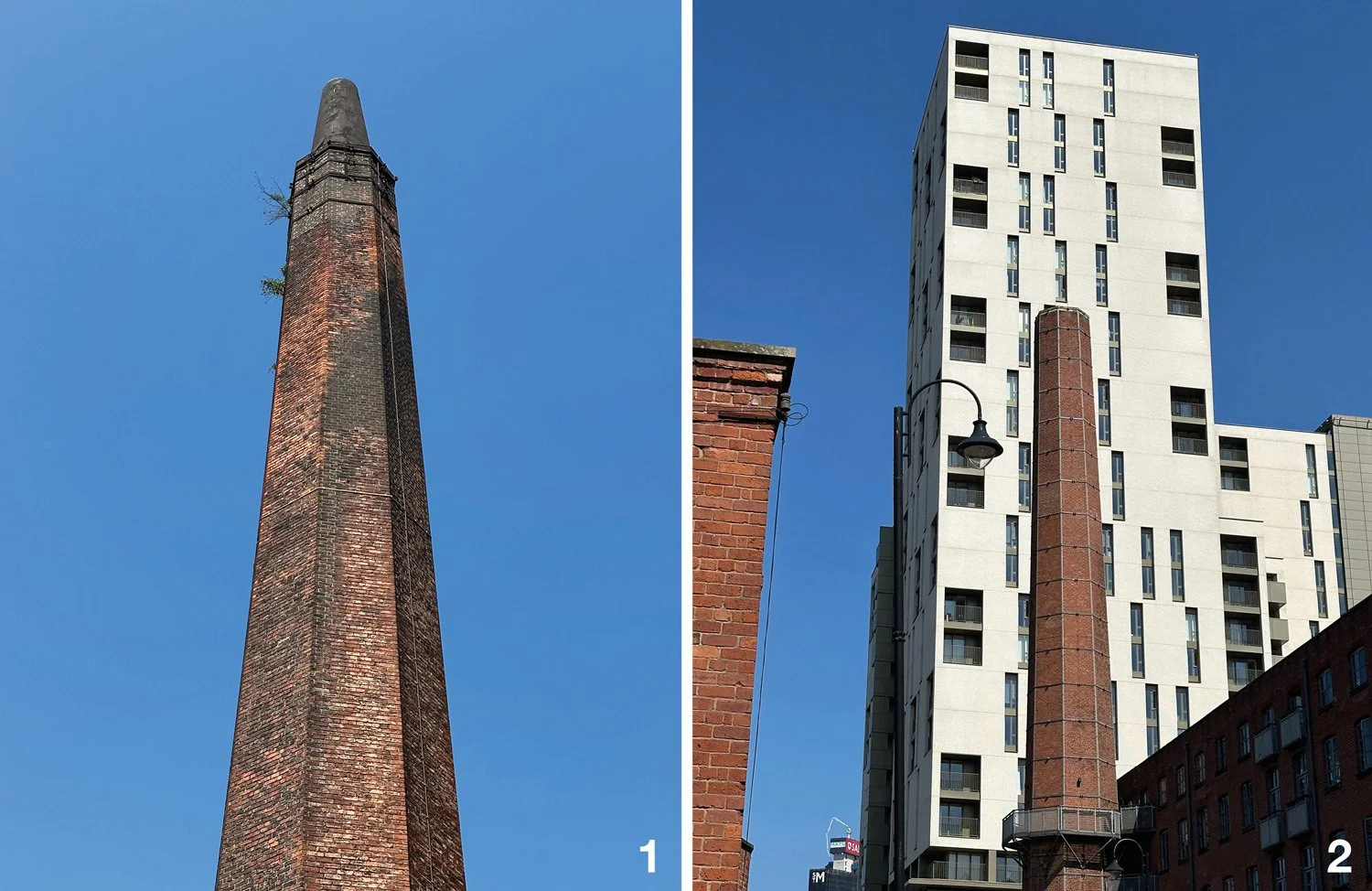
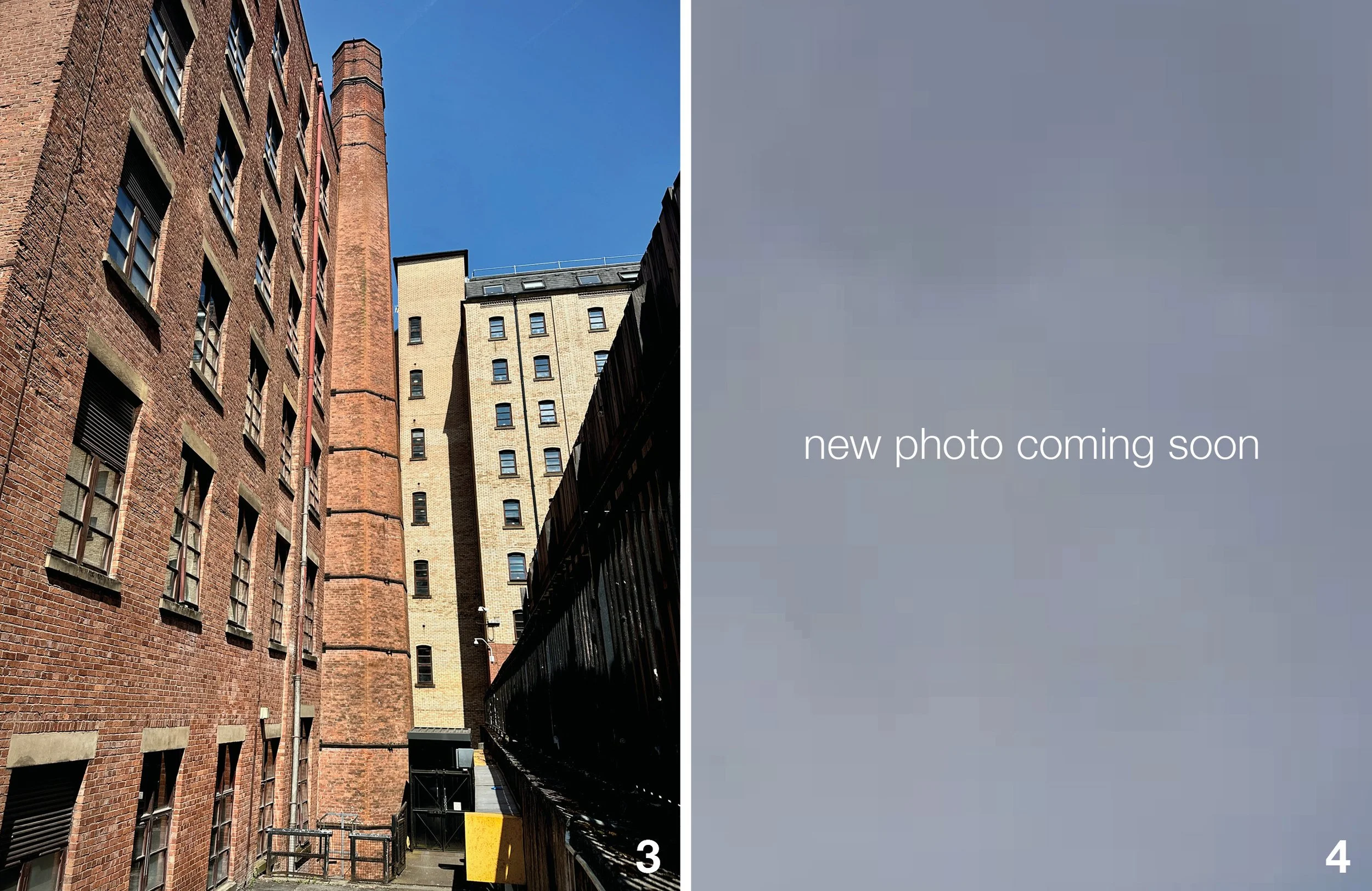
Today, those chimneys have almost completely disappeared from the skyline. I went looking around the city centre and found these six:
1. Cambridge Street
Standing beside the former Macintosh and Dunlop rubber works, this detached, tapering octagonal chimney is probably an early-19th-century structure.
Despite its position among the later rubber works, it is thought to have been built for Chorlton New Mill on the opposite side of Cambridge Street and connected to it by an underground flue. The chimney is now protected as a Grade II-listed structure.
2. Chorlton New Mill
Chorlton New Mill was built as a cotton-spinning mill in 1814, with later additions made in 1818 and 1845. Its surviving octagonal brick chimney is dated 1853.
The mill was later partly used for rubber production, reflecting the growth of the neighbouring Macintosh works. Historic England suggests that the original 1814 building may be Manchester’s oldest surviving fireproof mill.
3. Brownsfield Mill
Built around 1825 beside the Rochdale Canal, Brownsfield Mill began life as a cotton-spinning and “room and power” mill, in which space and mechanical power could be rented to different manufacturers.
Its chimney is unusually built into a stair and privy tower at the angle between two mill ranges. Historic England describes it as Manchester’s oldest surviving mill chimney.
The building later played an important part in Manchester’s aviation story. In 1910, A. V. Roe and Company - better known as Avro - established a workshop in the basement. Early aircraft were constructed there, dismantled to get them out of the building and then transported elsewhere for assembly and flying.
4. Former Macintosh Works, Hulme Street
This is perhaps the easiest of the six to miss. It is hidden within the middle of the former factory block between Cambridge Street and Chester Road, surrounded by later buildings.
The chimney can be seen in the centre of the block on an old Goad insurance map, within the extensive Dunlop Rubber Company and Charles Macintosh works. The factory produced India-rubber goods and waterproof fabrics, although the precise boiler house or manufacturing process served by this particular chimney still needs further investigation.
Charles Macintosh was producing rubberised cloth in this area by the 1830s, and the business eventually developed into a huge industrial complex employing processes very different from the cotton spinning taking place next door.
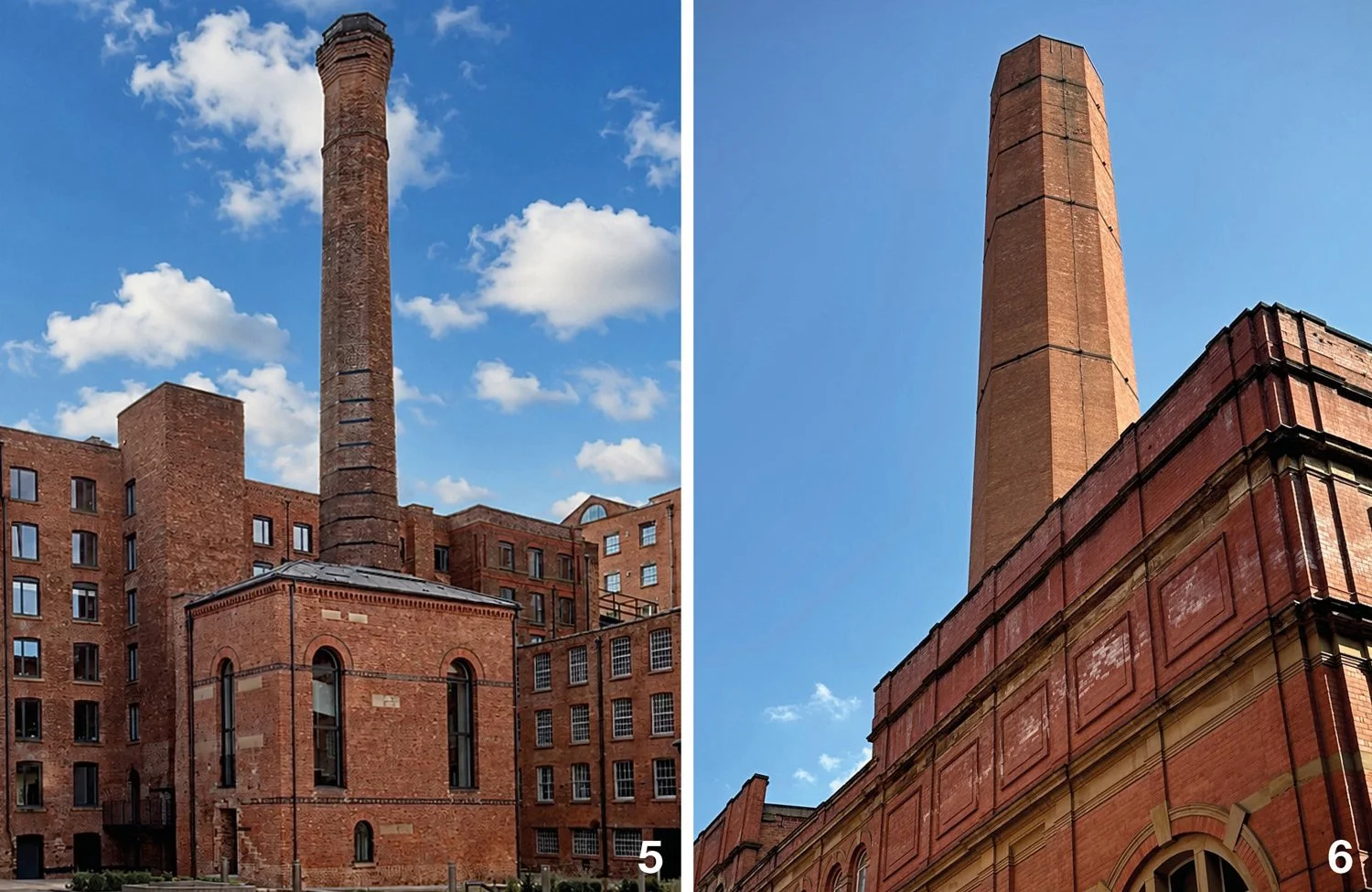
5. Murrays’ Mills
Murrays’ Mills is one of Manchester’s most important surviving cotton-mill complexes. Old Mill was built for the brothers Adam and George Murray in 1798, with Decker Mill added in 1802.
The octagonal chimney stands beside a detached engine house in the central yard. Although the earliest mill buildings date from the late 18th century, the engine house and chimney are thought to be mid-19th-century replacements.
The complex was originally arranged around its own canal basin, connected to the Rochdale Canal by a tunnel beneath Redhill Street. Old Mill is described by Historic England as the earliest surviving mill in Manchester.
6. The former Bloom Street electricity station
Not every surviving industrial chimney belonged to a mill or factory.
This huge octagonal chimney formed part of a local electricity-generating station built in 1901 on Winser Street, beside the Rochdale Canal and close to Princess Street. The Grade II-listed building was designed in an imposing Industrial Baroque style, with red brick, sandstone details and giant round-headed arches.
Historic England describes it as an unusual surviving example of an early local electricity station - a reminder that chimneys remained an essential part of Manchester’s infrastructure even as electricity began replacing steam power inside its factories.
Boddington’s lost landmark
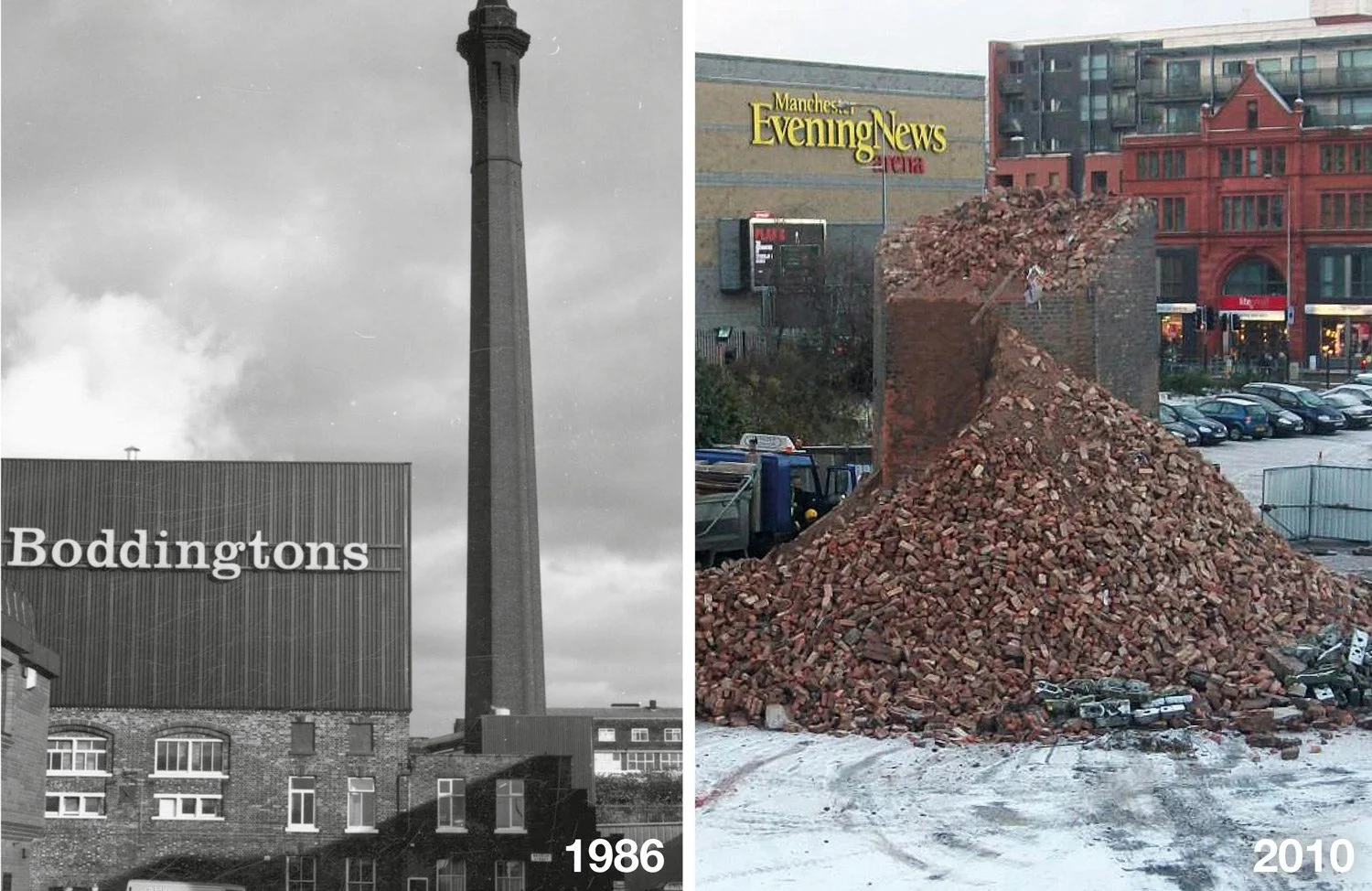
Sadly, Boddington’s historic late-19th-century chimney - probably around 120 years old when it came down - was demolished in 2010, only 16 years ago.
The 55-metre-high octagonal chimney had once carried the word Boddingtons down much of its length and remained standing after brewing ended at Strangeways in 2005 and most of the brewery was demolished in 2007. The lettering was removed around 2008, leaving the chimney standing alone in a vast cleared site.
Despite being one of Manchester’s most recognisable industrial landmarks, it was never listed. Its retention as a landmark within the redevelopment was considered, but it was eventually dismantled in September 2010.
Because of the surrounding buildings and roads, it could not simply be brought down in one piece. Steeplejacks removed its three internal steel liners and dismantled the cast-iron head and brickwork section by section, depositing the rubble down inside the chimney. The final 20 metres were removed using a high-reach demolition machine.
Its loss is proof that being iconic does not necessarily mean being protected.
These surely can’t be the only surviving examples. Do you know of another industrial chimney still standing in or around Manchester city centre?
Sources: Science and Industry Museum, Historic England’s National Heritage List for England, English Fine Cottons, Avro Heritage Museum and contemporary redevelopment and demolition records.
Boddington’s photograph, 1986: Manchester Libraries Archives