The Oxford: Not Just a Theatre Pub
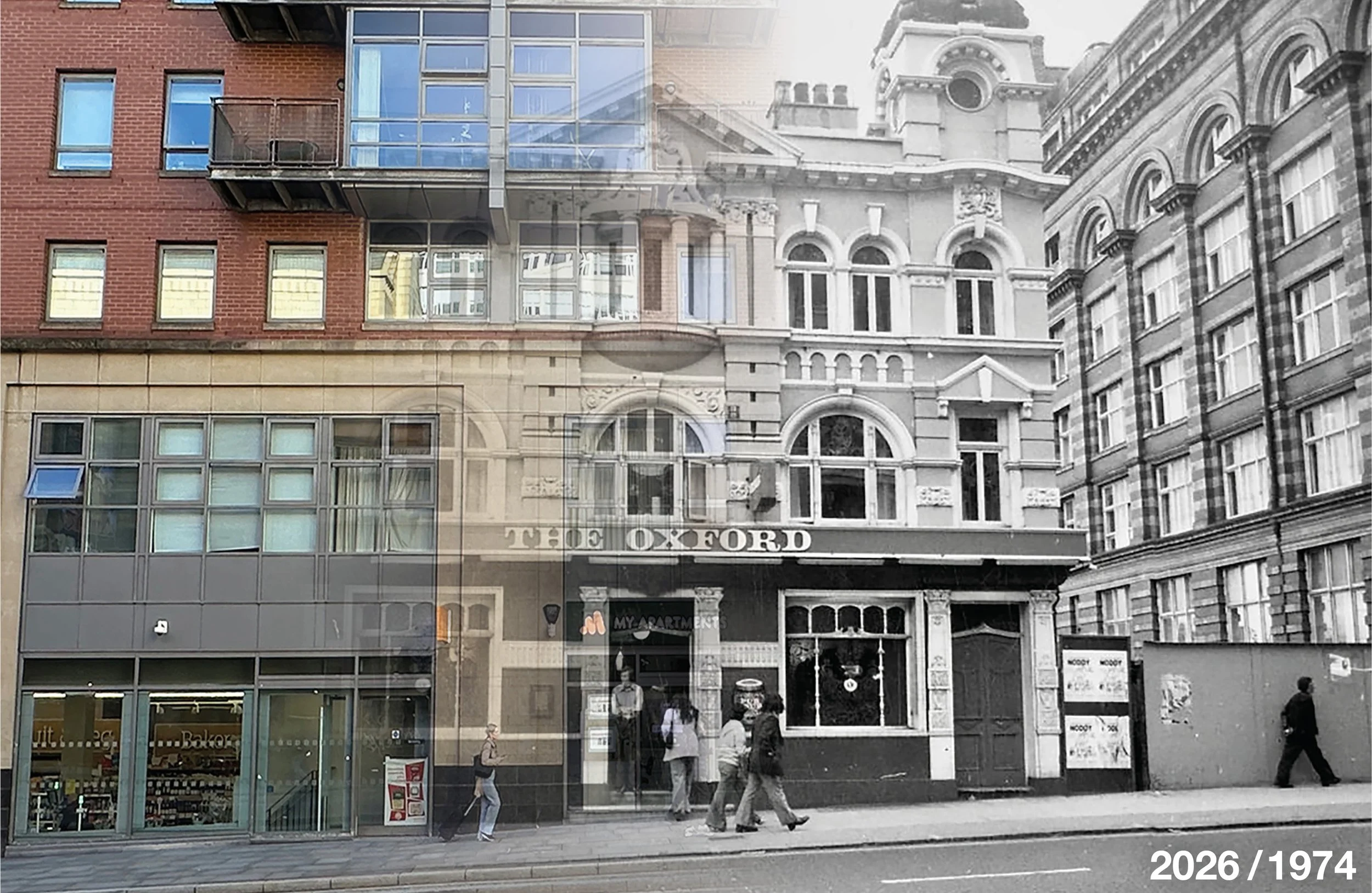
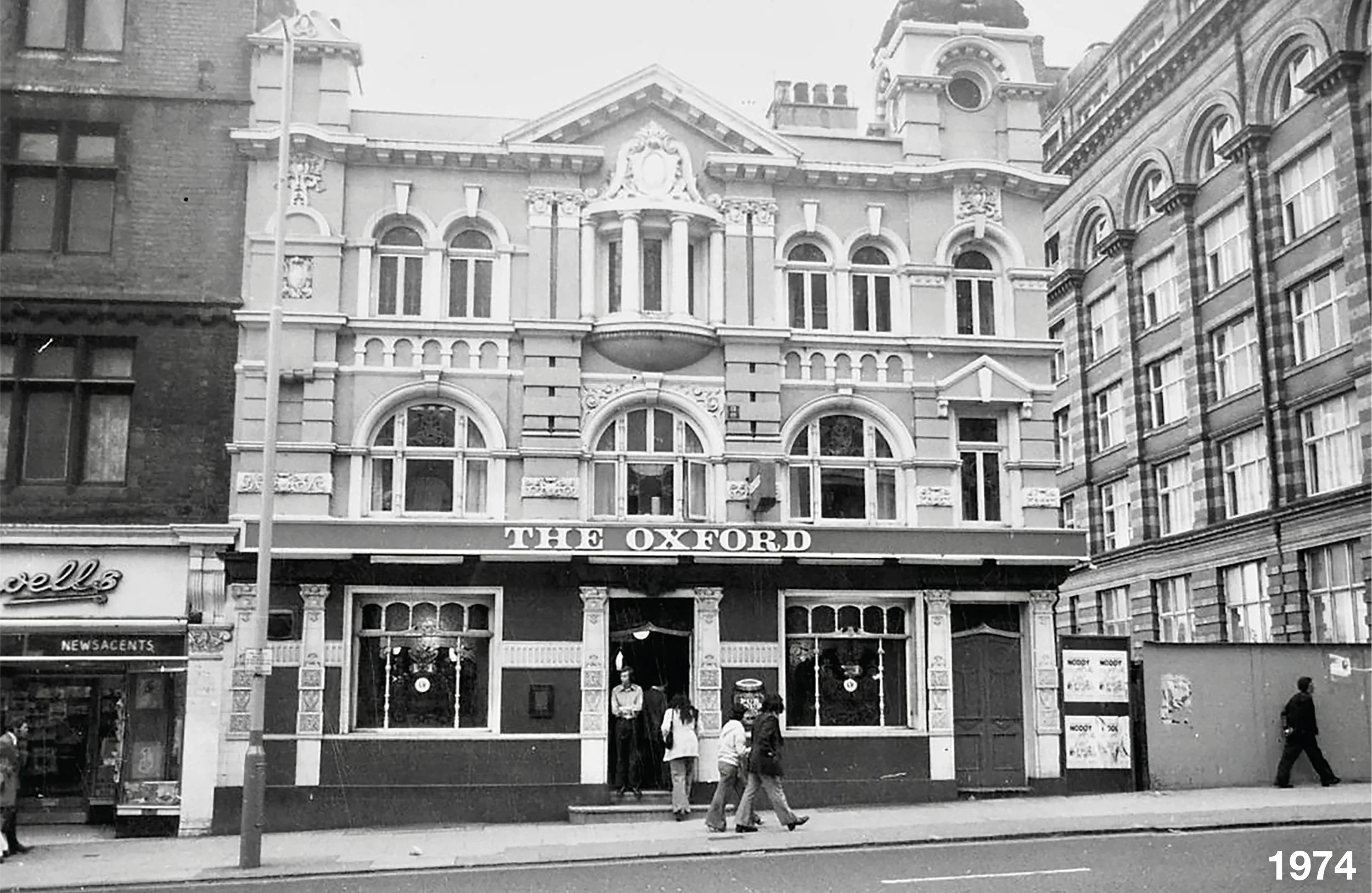
At first glance, this looks like exactly the sort of pub you’d expect to find opposite the Palace Theatre: a handsome old Victorian-looking Manchester pub, photographed here in the 1970s, serving theatre-goers and city-centre drinkers.
But the story of this site goes back much further.
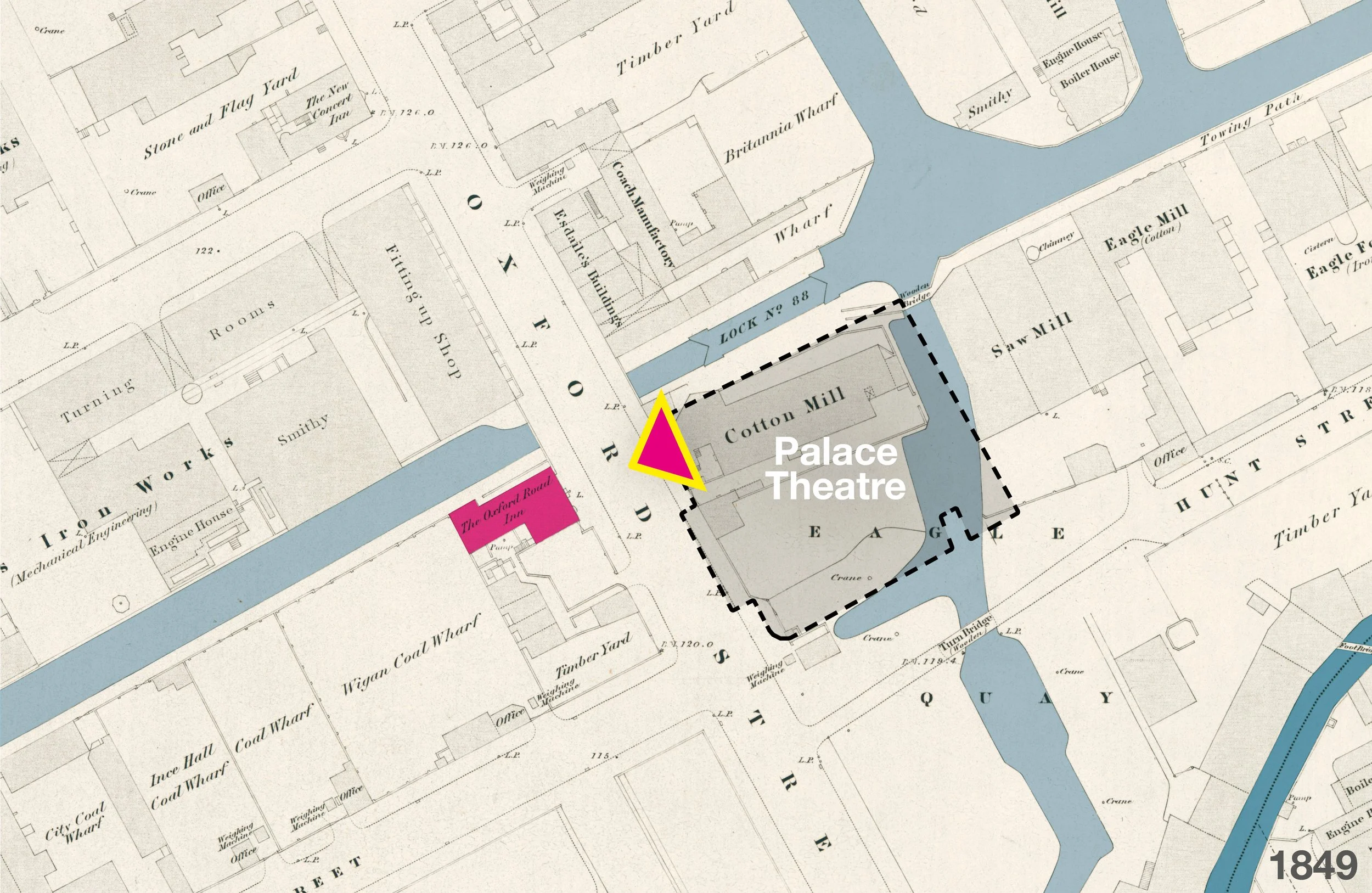
Long before the Palace Theatre, long before even Whitworth Street, and long before this part of the city took on its modern shape, there was already a pub here. And a cotton mill opposite. A building appears to be shown on the site on an 1809 map, just a few years after the Rochdale Canal opened in 1804, and by at least 1820 it was known as the Oxford Road Inn.
Even the name feels like a trace of an older Manchester. Today we know this stretch as Oxford Street, but the inn’s name seems to preserve an earlier sense of the route, before the city’s streets and boundaries settled into the pattern we recognise now.
An 1849 map shows just how different the area once was. Around the inn was a whole network of canal arms, basins and wharves feeding the mills and warehouses nearby. What now feels like a straightforward city-centre street was once part of a much more industrial and watery landscape.
And that older world survives not just in maps, but in small, almost-lost human stories.
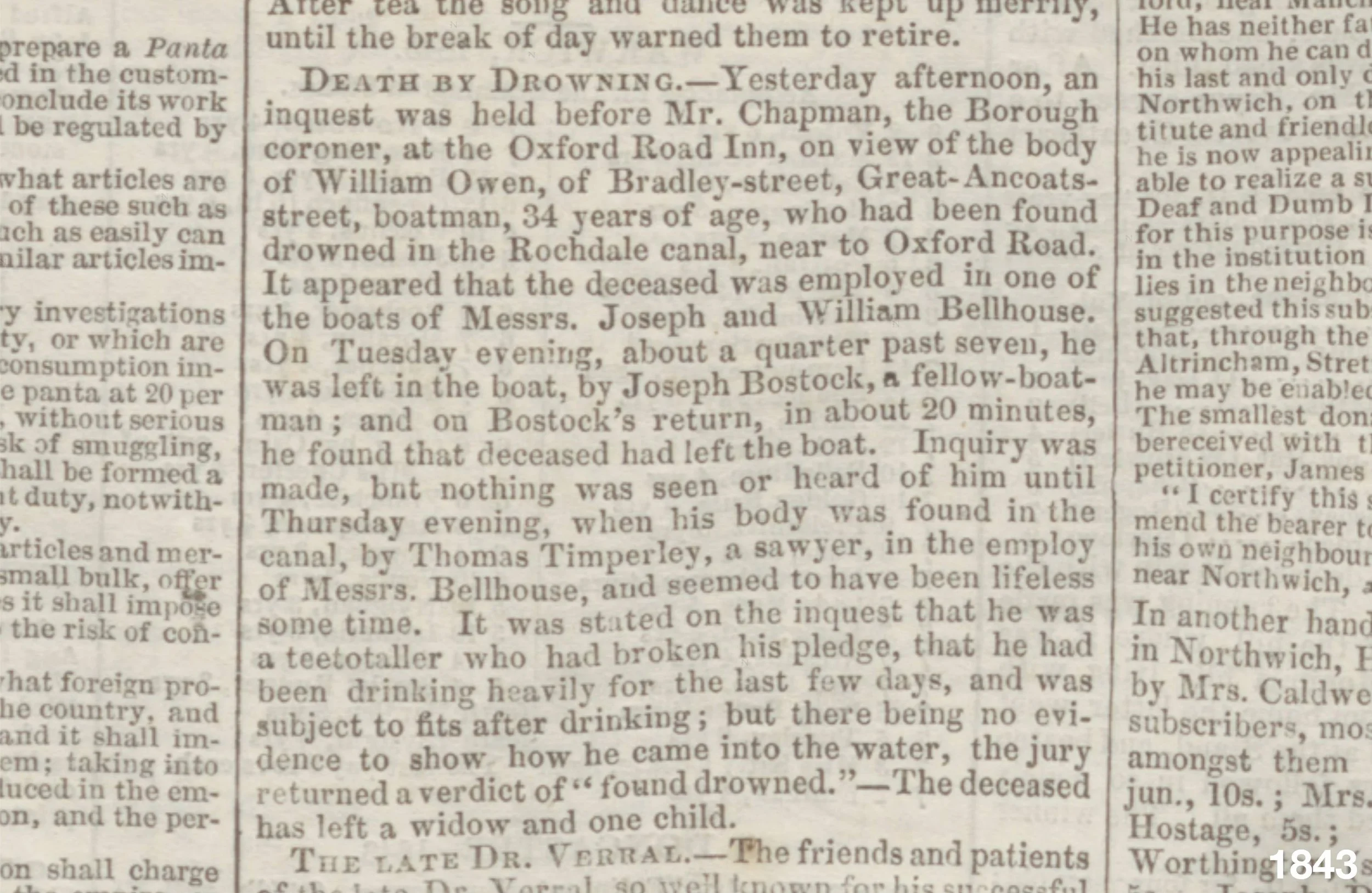
In July 1843, an inquest was held at the Oxford Road Inn on the body of William Owen, a 34-year-old boatman who had been found drowned in the Rochdale Canal nearby. That might sound unusual now, but in the 19th century pubs often doubled as civic spaces, and inquests were commonly held in inns and public houses close to where a death had taken place.
The newspaper report says William Owen had been a teetotaller, but had broken his pledge, had been drinking heavily for several days, and was said to be subject to fits. It also records that he left behind a widow and one child.
That detail feels especially sad. We will never know what had happened in his life, or what may have led him to start drinking. Nearly 200 years later, all that survives is a short report, a few lines from an inquest, and the name of the inn where it was held. But even that is enough to remind us that the history of a city is not just about buildings, streets and demolition. It is also about lives that passed through those places, and stories that almost disappear altogether.
William Owen was not just a dramatic footnote in an old newspaper. He was a working man in a hard canal-side world, with a wife and child, whose life seems to have taken a tragic turn. And for a moment, almost 200 years later, we can at least say his name again.
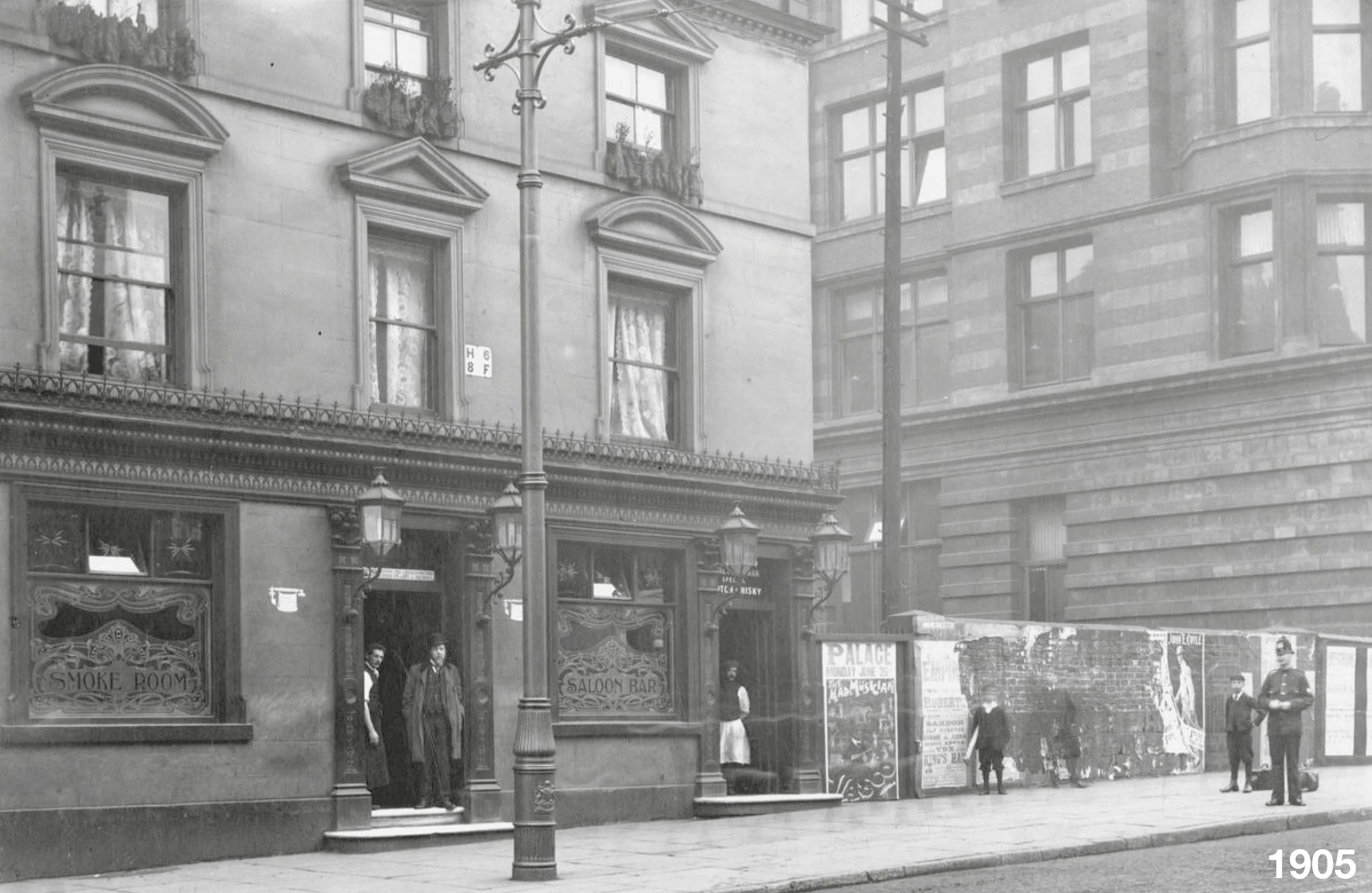
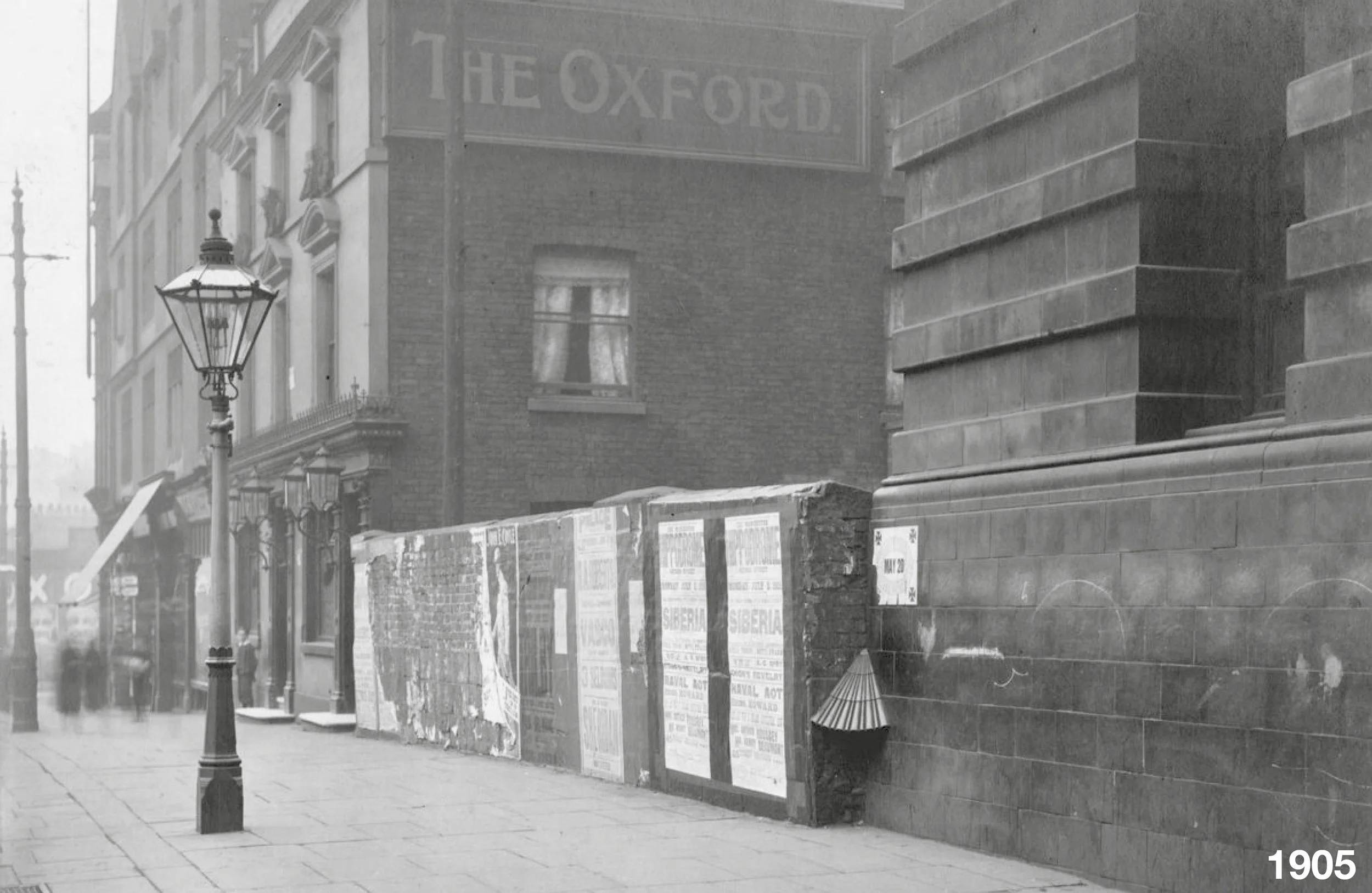
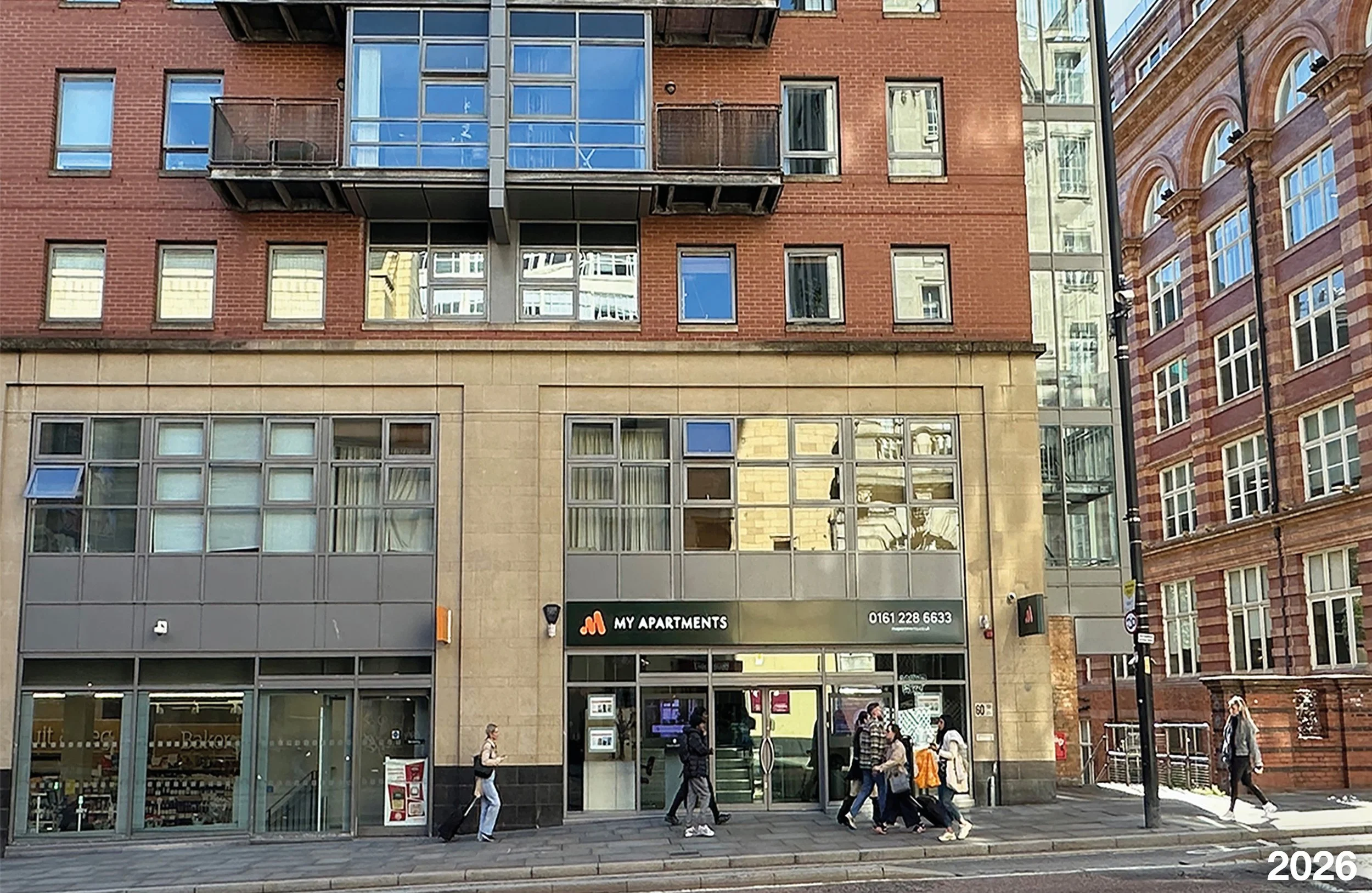
The Oxford itself survived into the late 20th century, before being demolished in 1980. Like so many Manchester sites, it then passed through that familiar in-between phase of clearance and car parking, before the apartments that stand here today arrived.
So this one small corner of Oxford Street holds several different Manchesters at once: canal Manchester, mill Manchester, theatre Manchester, demolition Manchester, and the city-centre residential Manchester of today.
And it all began with a pub that most people walking past now would never know was there.
1905 & 1974 photographs: Manchester Libraries Archive