30 Years Ago, Manchester Changed. Again.
Exactly thirty years ago, Manchester changed. Again.
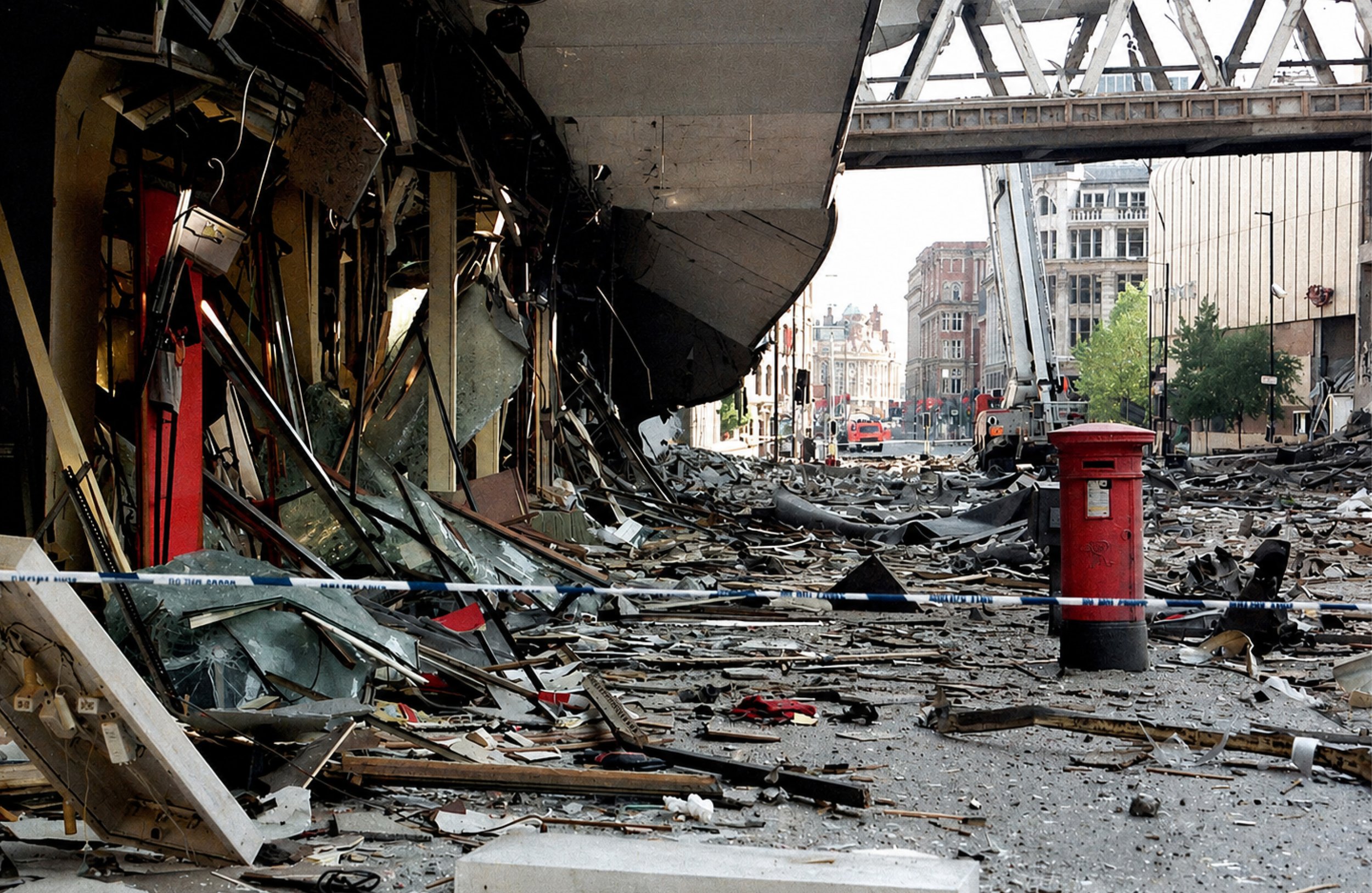
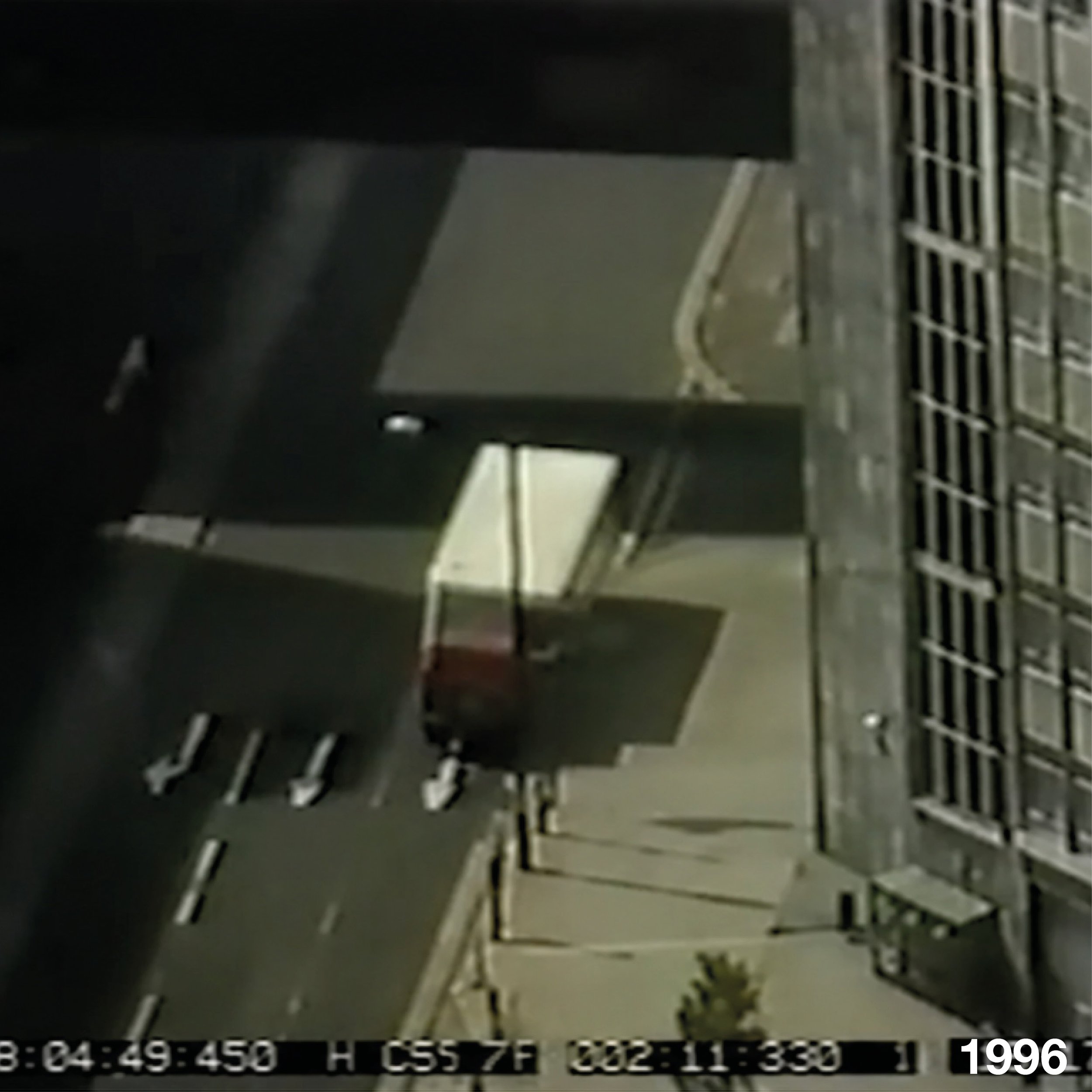
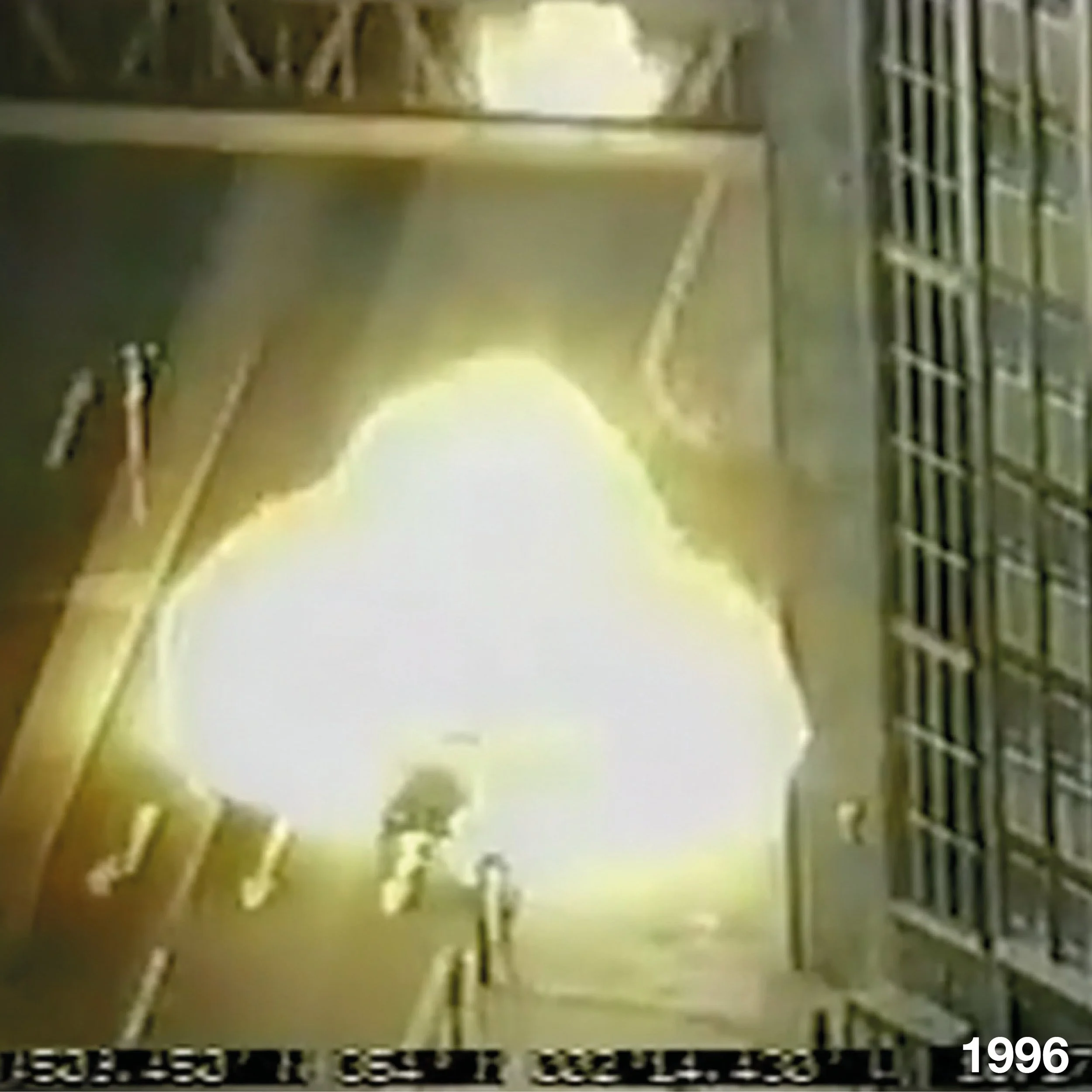
At 11.17am on Saturday 15 June 1996, a one-and-a-half-tonne IRA bomb exploded on Corporation Street, in the heart of Manchester city centre.
212 people were injured, 13 of them seriously. Miraculously, nobody died.
It is often said that the bomb was the catalyst for making Manchester the city it is today. And, in one very visible sense, it was.
The area around Corporation Street was torn open. Hundreds of businesses were affected, familiar buildings were badly damaged or lost, and the damage was estimated at around £700m - roughly £1.5bn in today’s money.
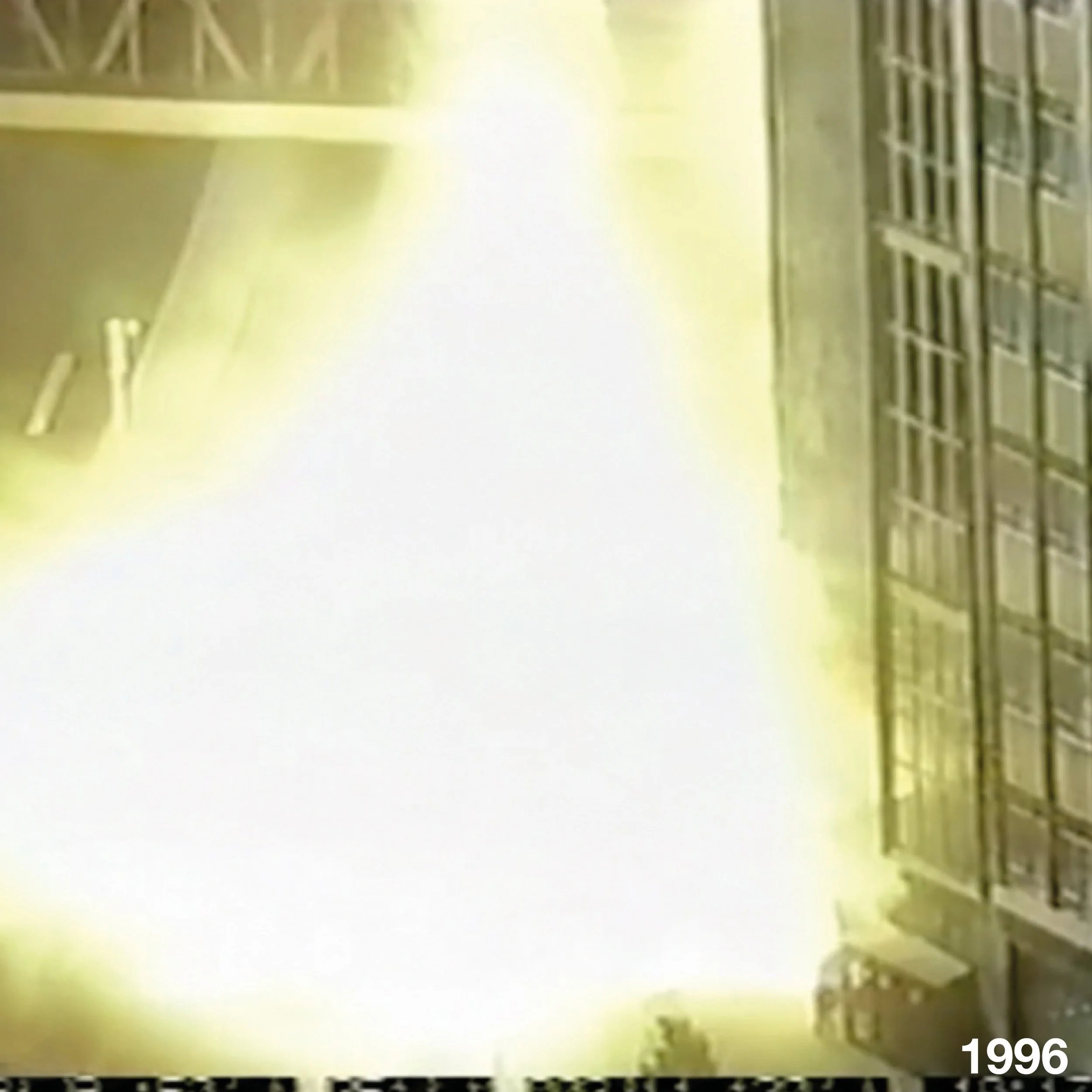
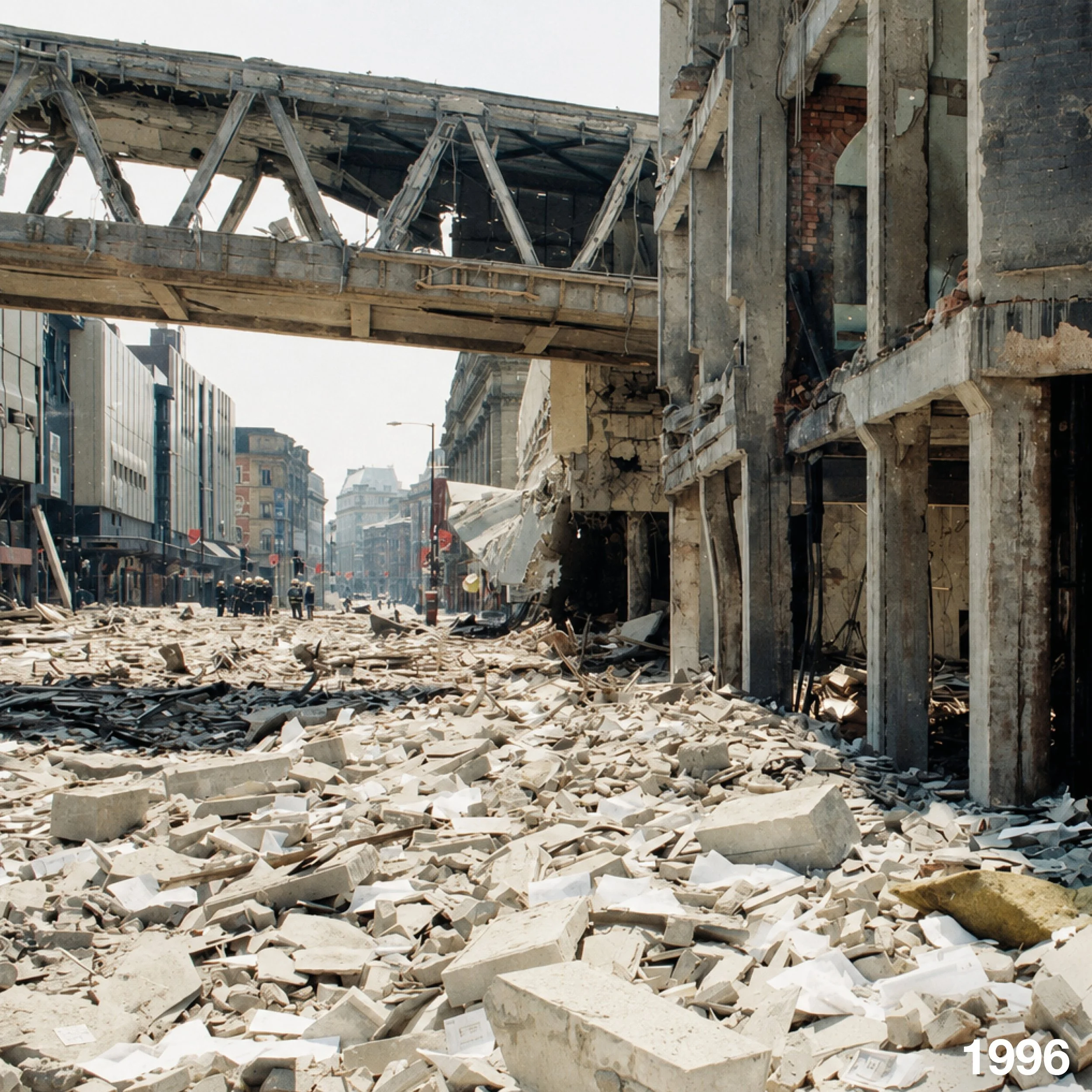
Over the years that followed, with support from government and European funding, the area was rebuilt. Streets, buildings and familiar routes were altered, removed or remade. For many people, what came after is a better piece of city: more open, more connected, and in places more generous than what had been there before.
But that can never be the whole story.
Because the rebuilding only came after violence, injury, fear, trauma, lost livelihoods, and lives changed in ways we may never fully understand. Some people may still carry the physical or psychological effects of that morning. Others will remember places, shops, routes and buildings that disappeared afterwards, and feel that something was lost too.
So this is not a story about a bomb “improving” Manchester. It is one story within a much longer story of a city repeatedly being made, unmade and remade.
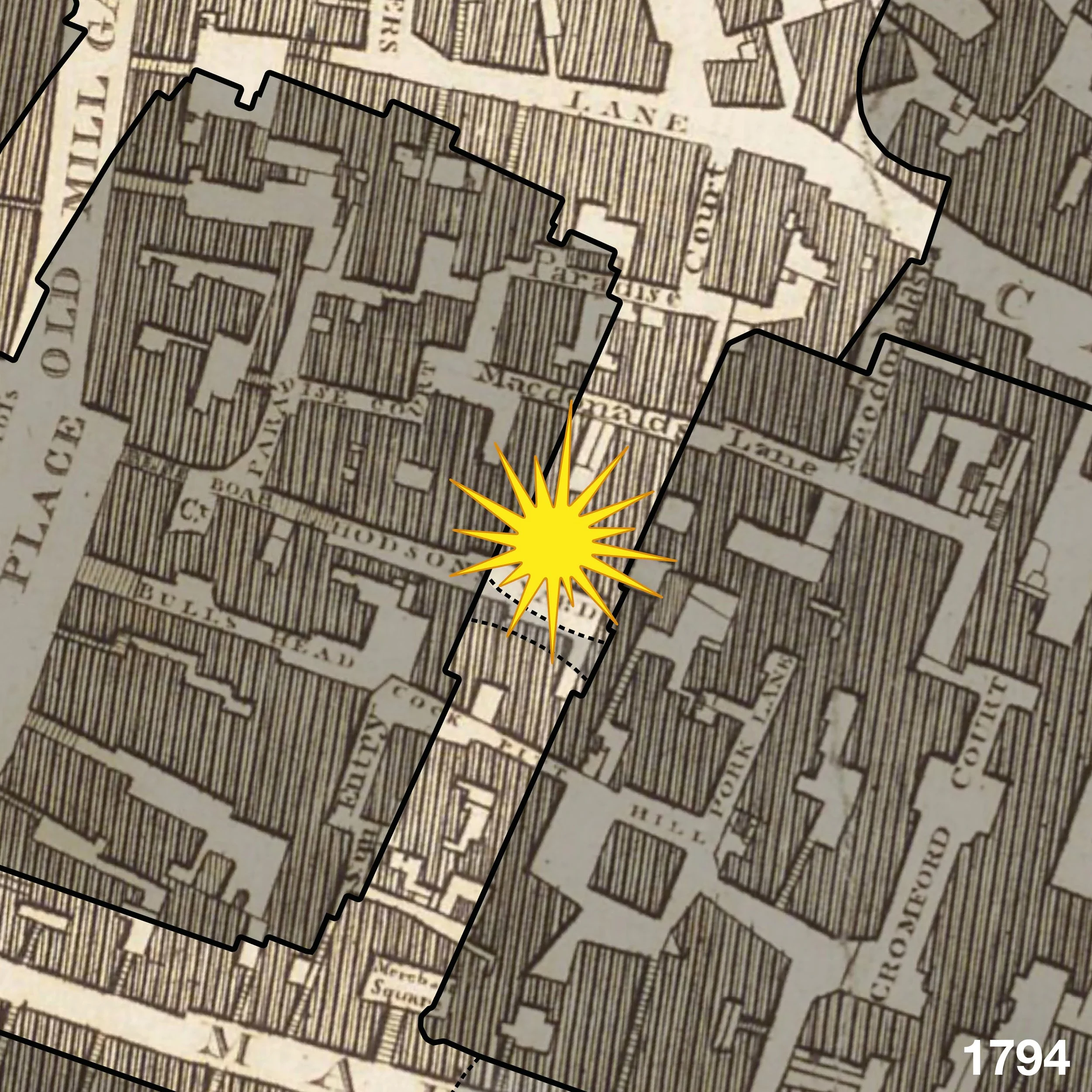
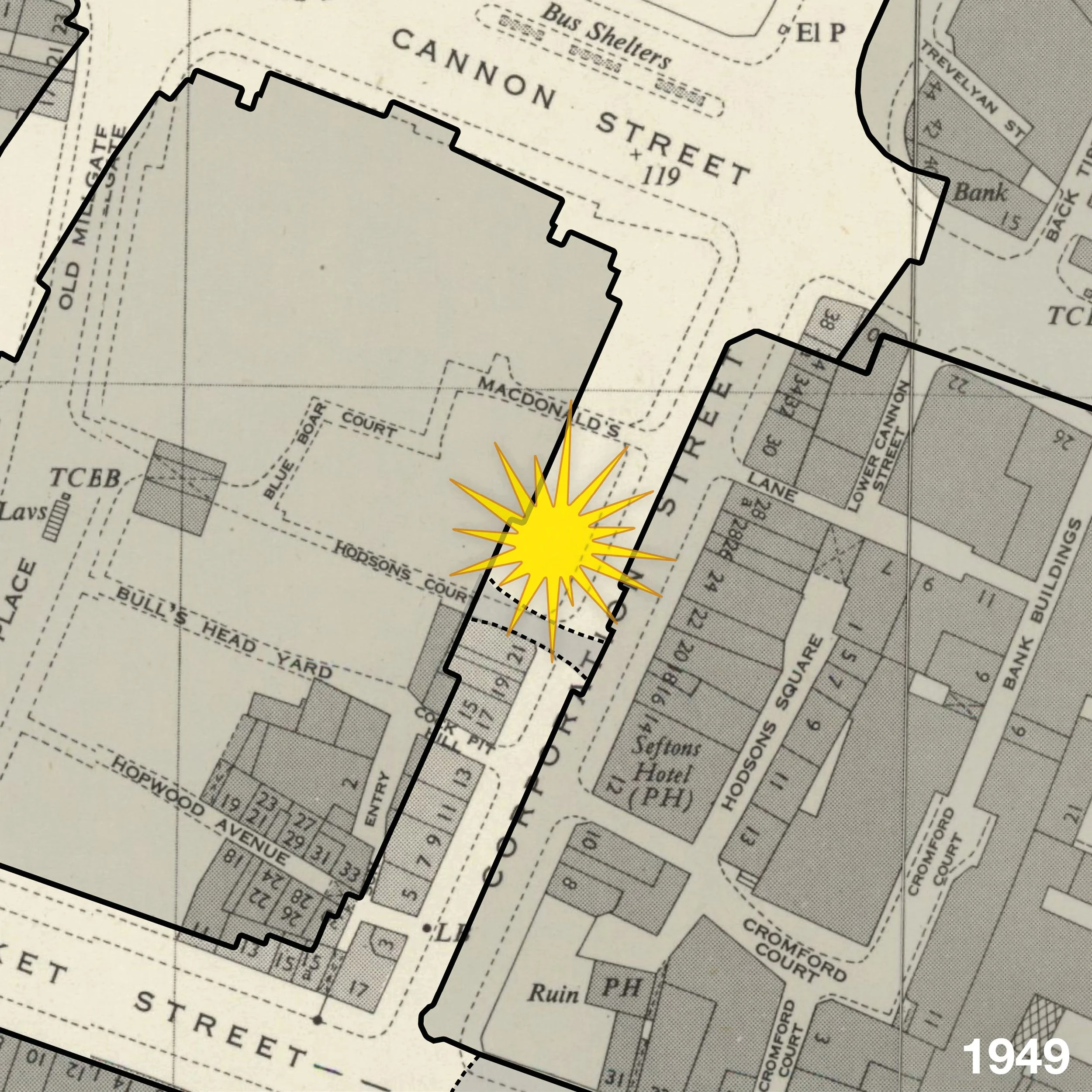
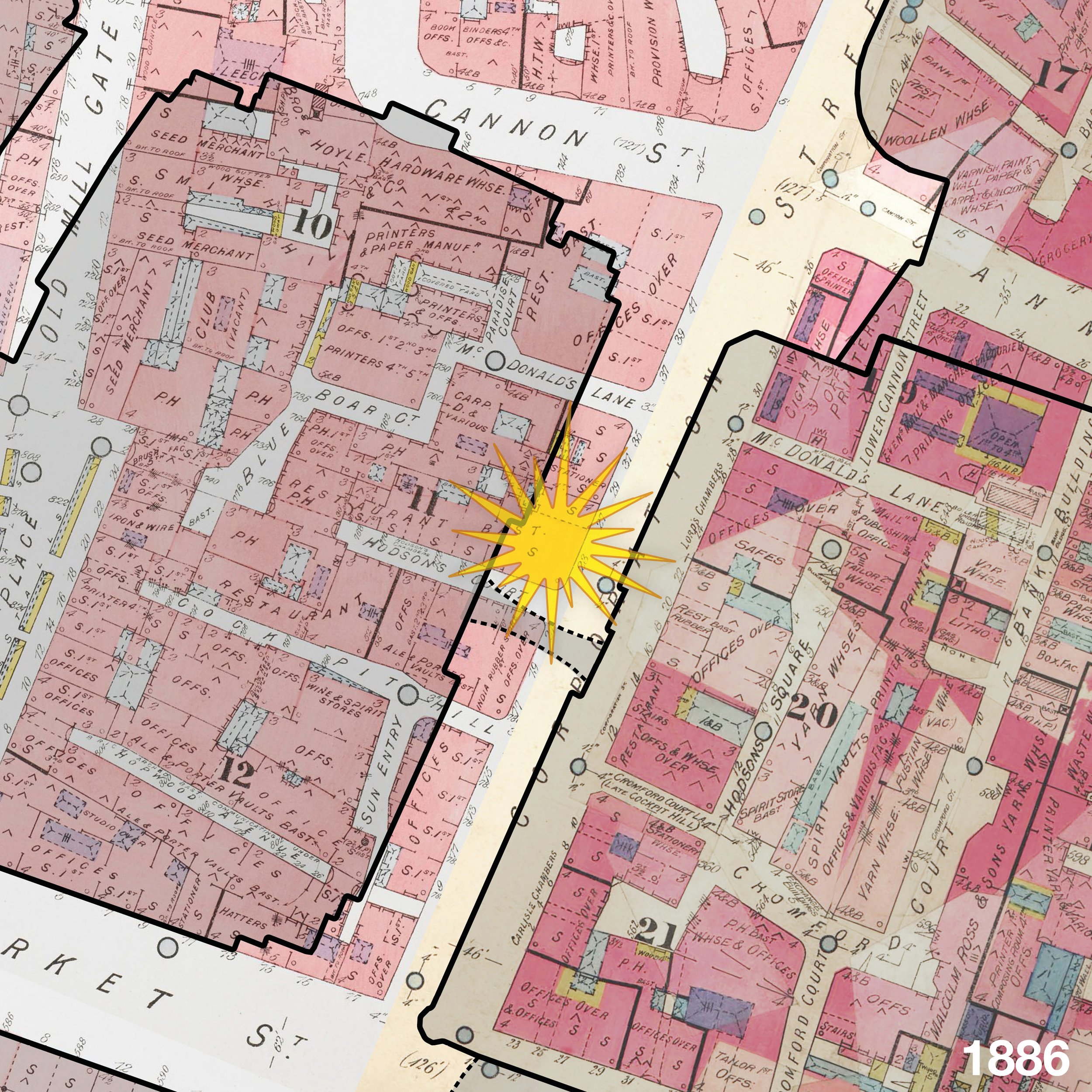
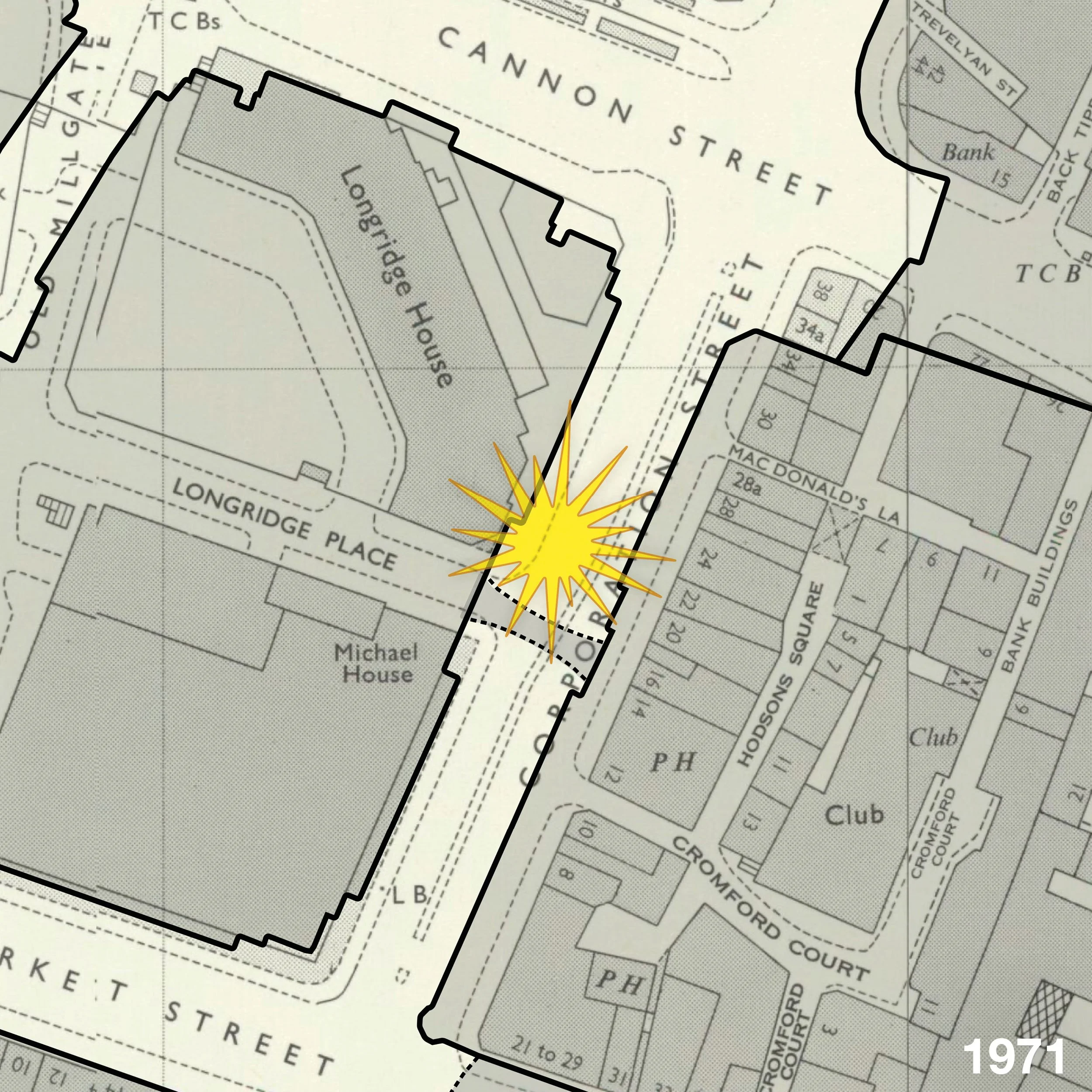
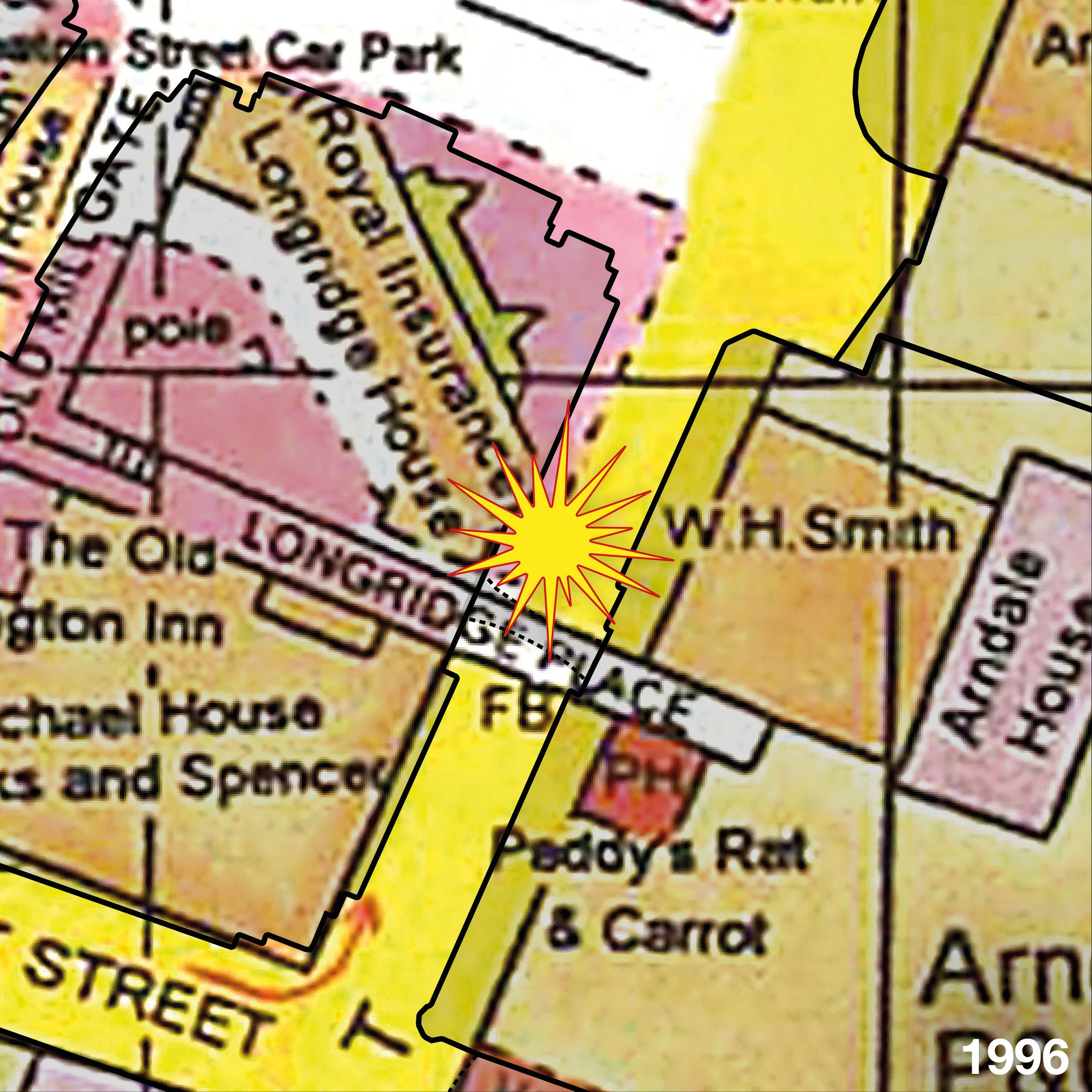
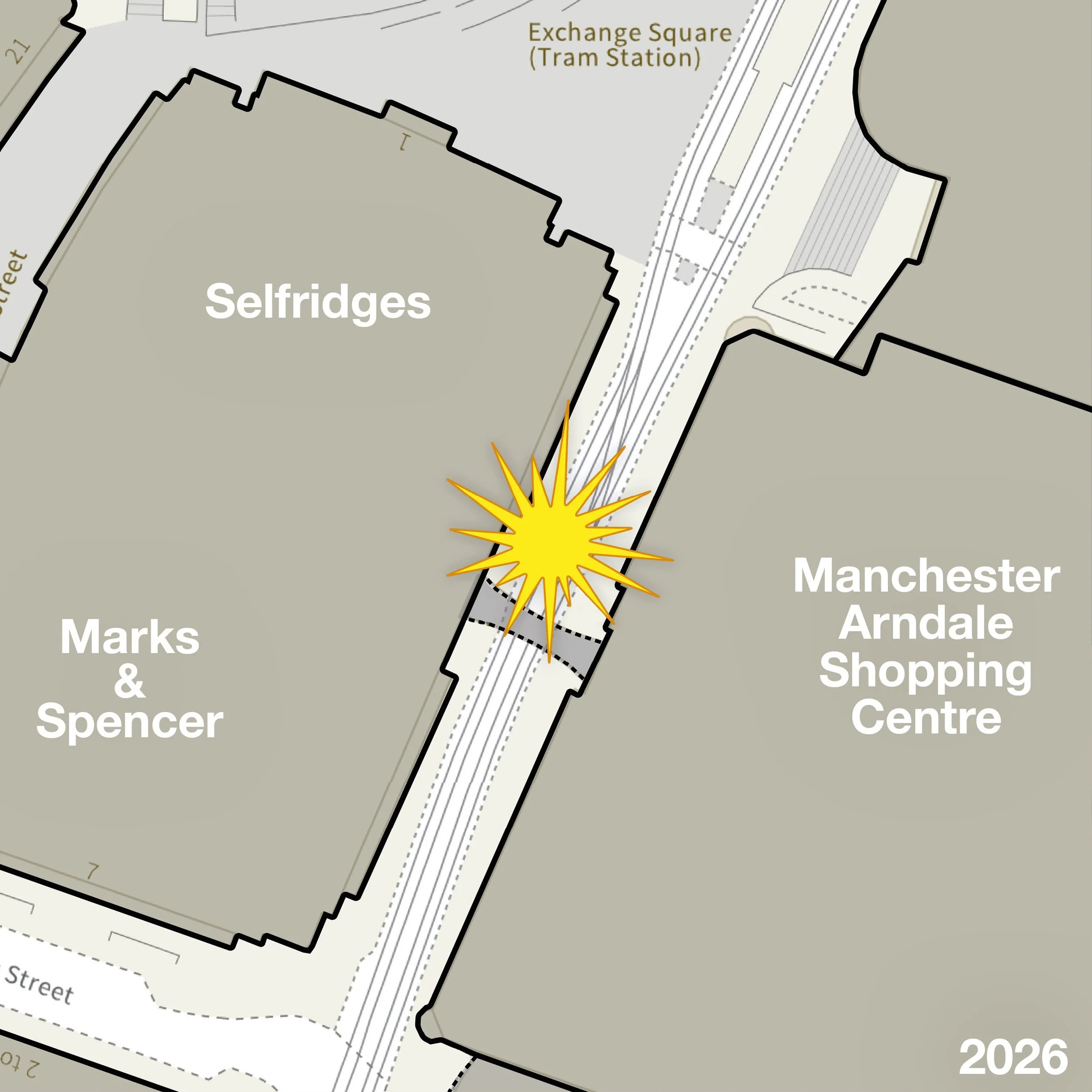
Take the 18th century. Corporation Street did not yet exist. On one of the earliest maps of Manchester, the site of the 1996 bomb sits somewhere between Hodson’s Yard and McDonald’s Lane, close to the Slip Inn.
Then came the Industrial Revolution. Manchester expanded rapidly through commerce, industry and cotton. Streets were laid out, plots were filled, warehouses rose, and the edge of the old town became part of an increasingly dense commercial city.
Then came the bombs of the Second World War, followed by post-war planning and redevelopment. And then, in 1996, another bomb.
What makes the 1996 bomb so powerful in the city’s memory is partly its visibility. The damage was immediate, public, photographed, televised and felt by thousands. But many of the forces already reshaping Manchester were less visible: policy, planning, land ownership, political ambition, Olympic bids, transport investment, commercial pressure, and decisions made in rooms most people never saw.
The IRA bomb was not the beginning of Manchester’s modern story. It was a devastating and highly visible rupture in a much longer pattern of change.
These maps are a reminder that Manchester has never been fixed. The city is always being made, unmade and remade.
And yet, amid all that change, one small object remained.
The red Victorian cast-iron postbox first appears on a 1908 map, and has now seen this part of Manchester change for well over a century. It survived the blast, together with the mail inside, and still stands in the same spot today, with a small plaque telling its own story.
The bomb changed Manchester. But it did not create modern Manchester on its own.
It sits within a much longer story… one of growth, loss, damage, ambition, memory and reconstruction.
-
A lot of writing about the 1996 IRA bomb understandably focuses on the scale of the damage, the disruption, and the way it became a catalyst for the rebuilding of Manchester.
That story is important, but I also wanted to look at it slightly differently.
Behind the wider story of regeneration were thousands of individual lives affected in very real ways. People were injured. Businesses were lost or disrupted. Shop workers, office workers, residents, visitors and emergency services all had to live through something frightening and traumatic.
I also wanted to place the bomb within a longer story of change in this part of Manchester. The city was already changing before 1996, through the Olympic bids, the tram network, shifting politics and wider changes in how Manchester saw itself. The bomb accelerated some of that change and made it far more visible, but it did not happen in isolation.
That is why I used a series of maps in the story. They show that this part of Manchester has changed many times before - streets, yards, markets, shops, churches, offices and department stores have all appeared, disappeared, been rebuilt or reimagined.
For me, this is what the walking tours and stories are really about: not just what happened, but how places evolve, why they change, and what gets remembered or forgotten along the way.
The IRA bomb and the redevelopment of this part of Manchester is included in my Medieval Quarter walking tour.
Photographs: GMP
1996 map: Andrew Taylor