Harry Hall Cycles: The Last Sign of an Independent Manchester?
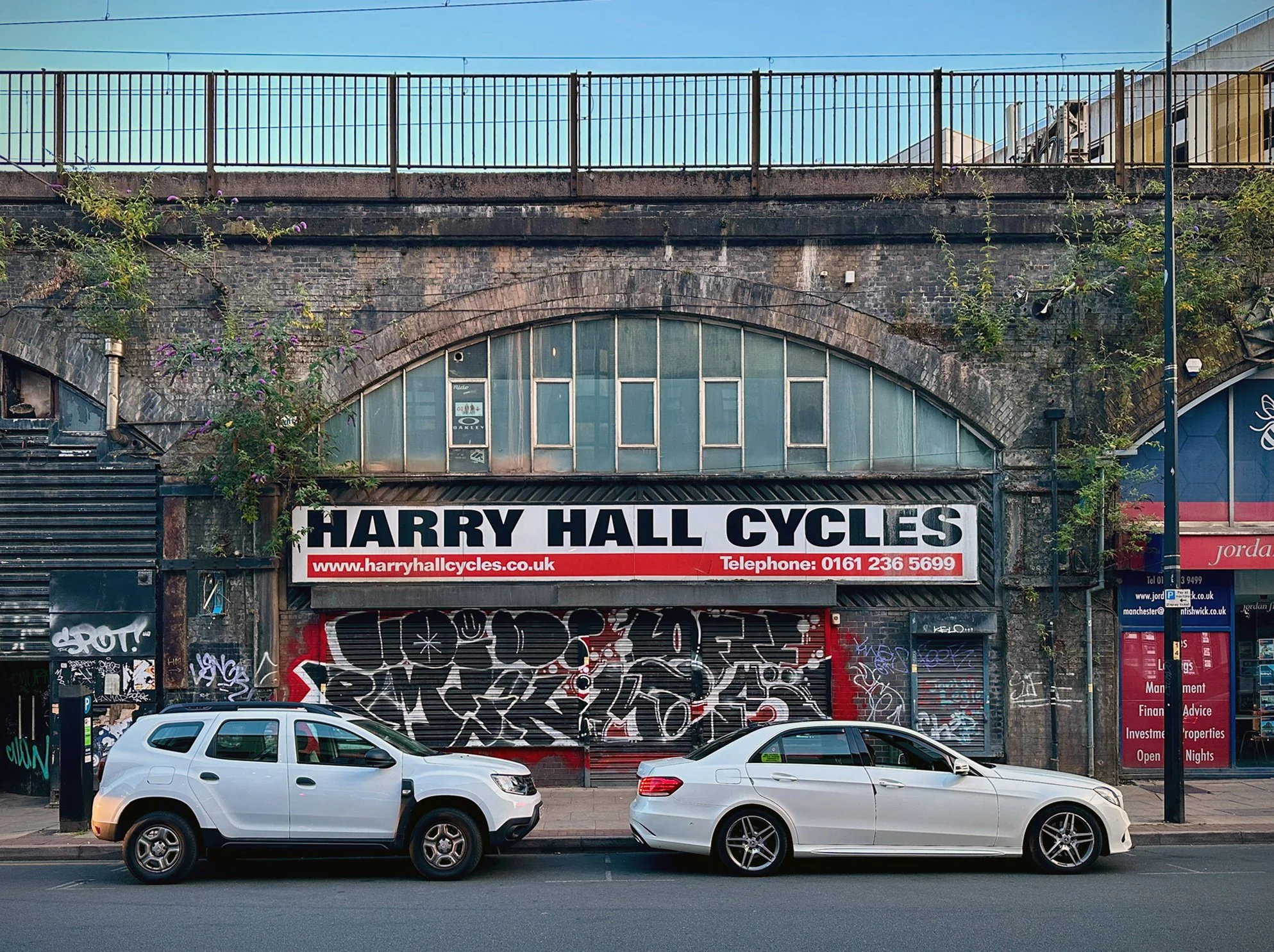
I took this photograph only the other day.
For now, the name HARRY HALL CYCLES is still visible across a railway arch on Whitworth Street West. But I wonder for how much longer.
Further along the viaduct, arches are already being stripped out and hoardings are going up. It feels as though this arch, and those beside it, may eventually meet the same fate. When the abandoned shopfront disappears, Manchester will lose what may be the last visible sign, quite literally, of one of its great independent businesses.
I came across the name again while doing a little extra research around Lancaster Arcade for my Medieval Quarter walking tour.
A wonderful photograph from 1973 (below) shows the arcade’s narrow passageway and tiers of tiny premises. Signs advertise coin dealers, clothing manufacturers, jewellers and numerous other independent traders. Low down on one wall is a small sign for Harry Hall Cycles.
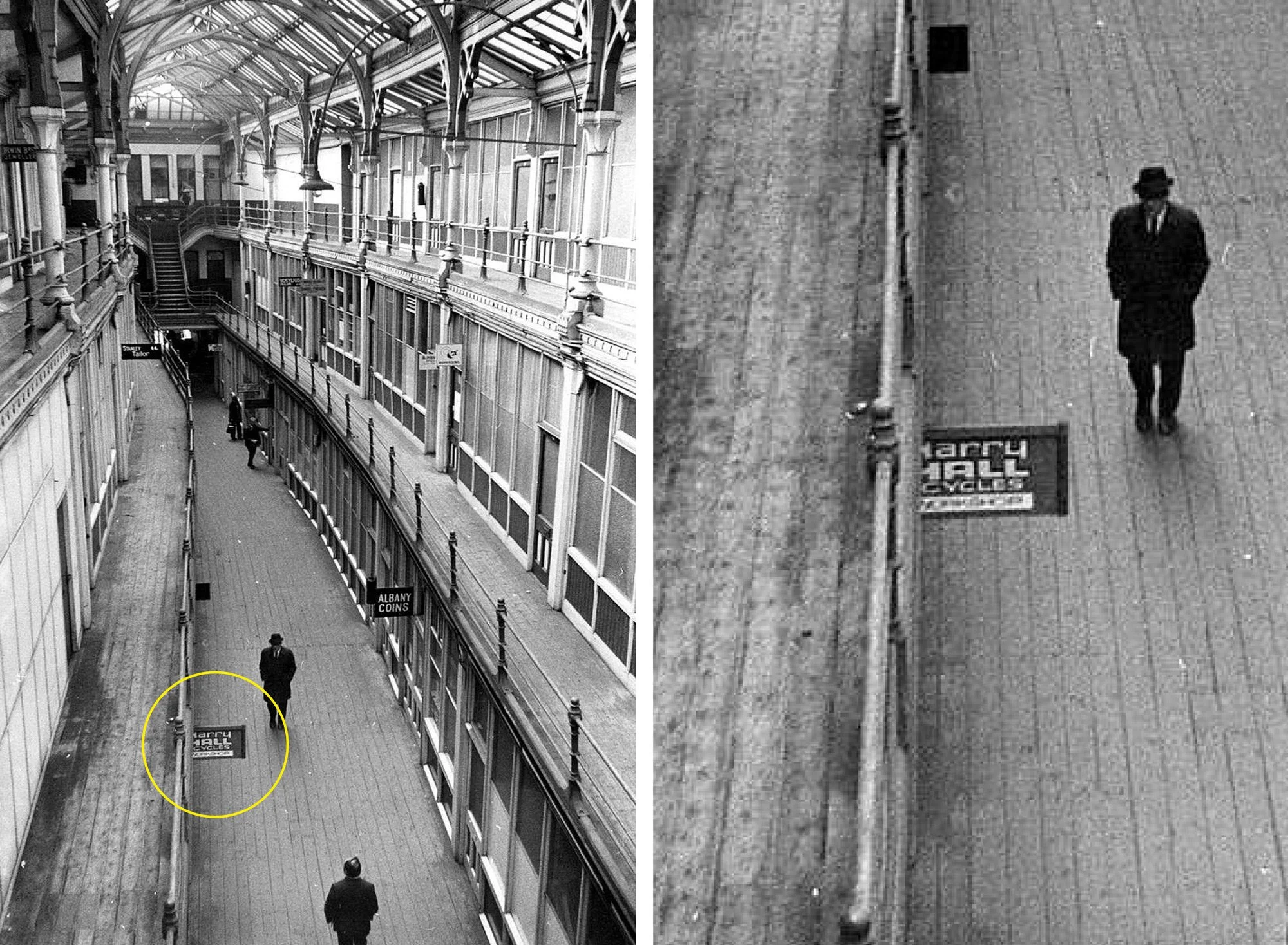
At first, I thought the shop itself might have been inside the arcade. It wasn’t. The sign was advertising or directing people to Harry Hall’s nearby shop at 30-32 Cathedral Street.
What makes this more interesting is that those premises were actually street-facing units on the Cathedral Street side of the Corn Exchange building, overlooking Manchester Cathedral. The old shopfront photograph shows the business spilling onto the pavement: bicycles, wheels, frames and equipment filling every available inch. So rich in character.
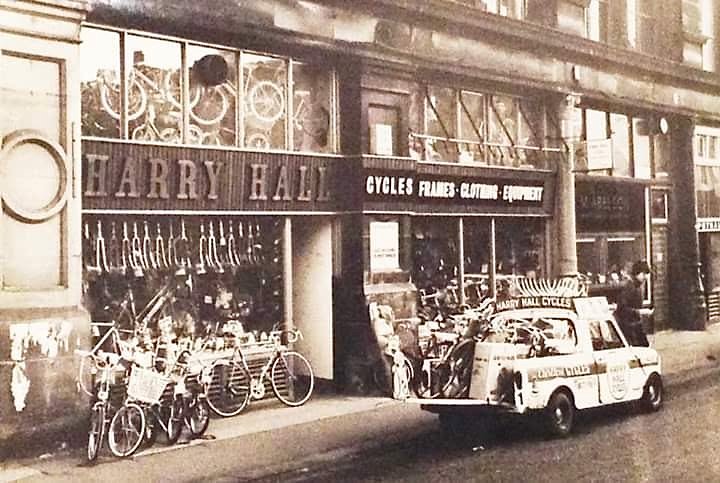
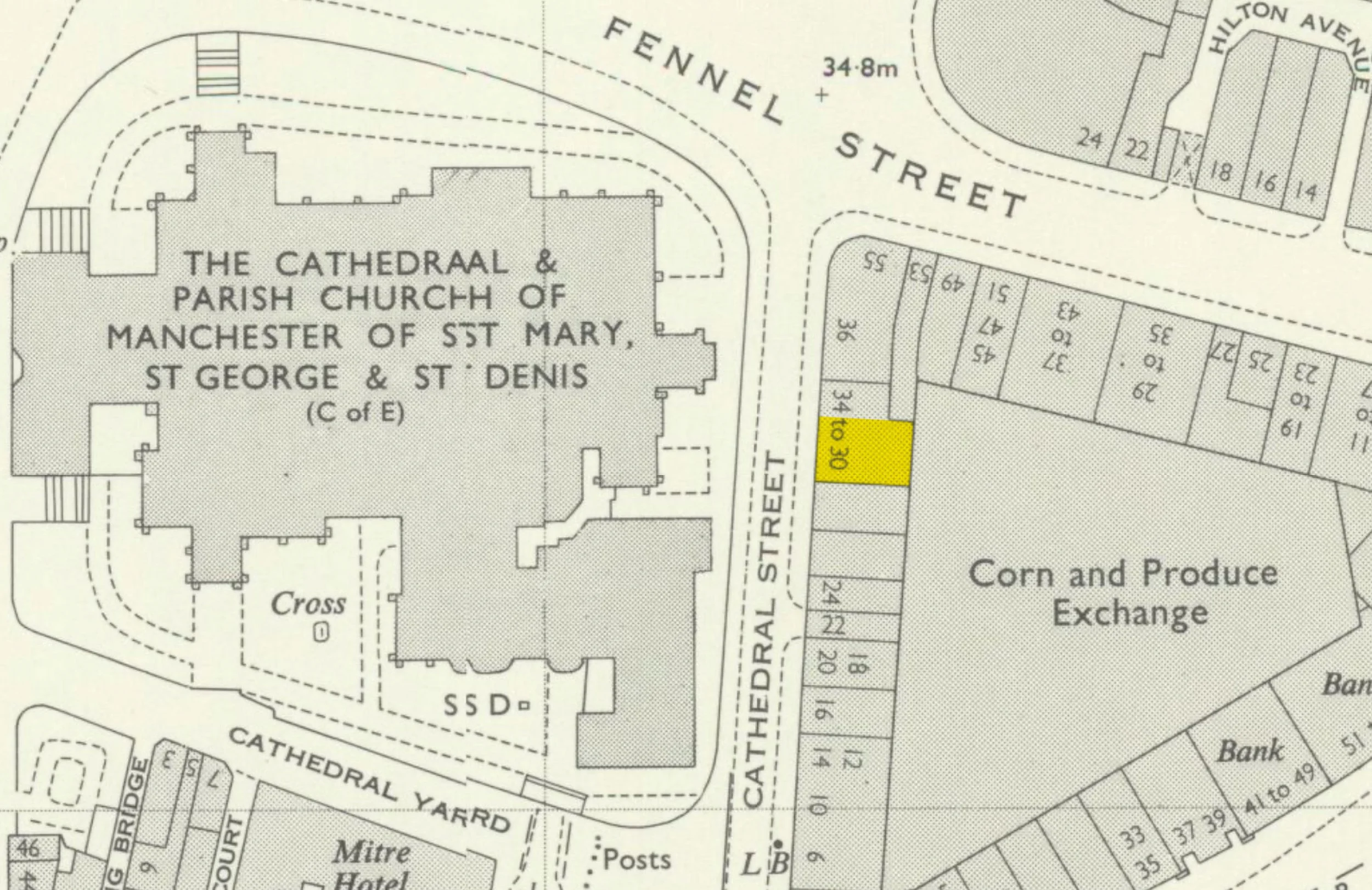
Harry Hall had founded the business in the mid-1950s, originally on Hyde Road in West Gorton. The business later moved to number 30 Cathedral Street and expanded into number 32.
The Lancaster Arcade photograph is therefore more than a picture of a lost shopping arcade. It is almost a directory of the kind of Manchester that once existed: a city full of small, specialised and sometimes wonderfully peculiar businesses, occupying modest premises and surviving because space was available at a rent their trade could support.
In 1984, Harry Hall moved again, this time into a 7,000-square-foot sub-basement at 25-33 Hanging Ditch, inside the Corn Exchange.
The Corn Exchange before the 1996 bomb was another extraordinary ecosystem of independent traders. You could buy records, vintage clothes, books, jewellery and all sorts of things that did not fit easily into a conventional shopping centre. There were tattooists, tarot readers, repairers and workshops alongside Harry Hall’s enormous basement cycle shop.
A bicycle shop needs considerably more room than a newsagent or record stall. The fact that an independent family business could occupy 7,000 square feet in the middle of Manchester tells us something important. The space did not have to be giveaway-cheap. It simply had to be affordable, priced in a way that bore some relationship to the business that could realistically operate from it.
The 1996 bomb brought that chapter to an abrupt end. After a brief move to Eccles, Harry Hall returned to the city centre in February 1997, taking approximately 4,000 square feet in the modernist building at the corner of Lever Street and Dale Street. The ground-floor space is now occupied by Chapter One Books.
The Northern Quarter was a very different place then. It was scruffy in parts, certainly, but it was also useful and relatively affordable. Its old warehouses and larger shop units gave independent businesses room to experiment and grow.
I rented premises myself - an office on the corner of Stevenson Square. The rent was not impossibly low, it was simply the right rent. It was affordable enough to allow a small business to exist.
In 2000, Harry Hall moved once more, this time into the railway arches at 67-69 Whitworth Street West.
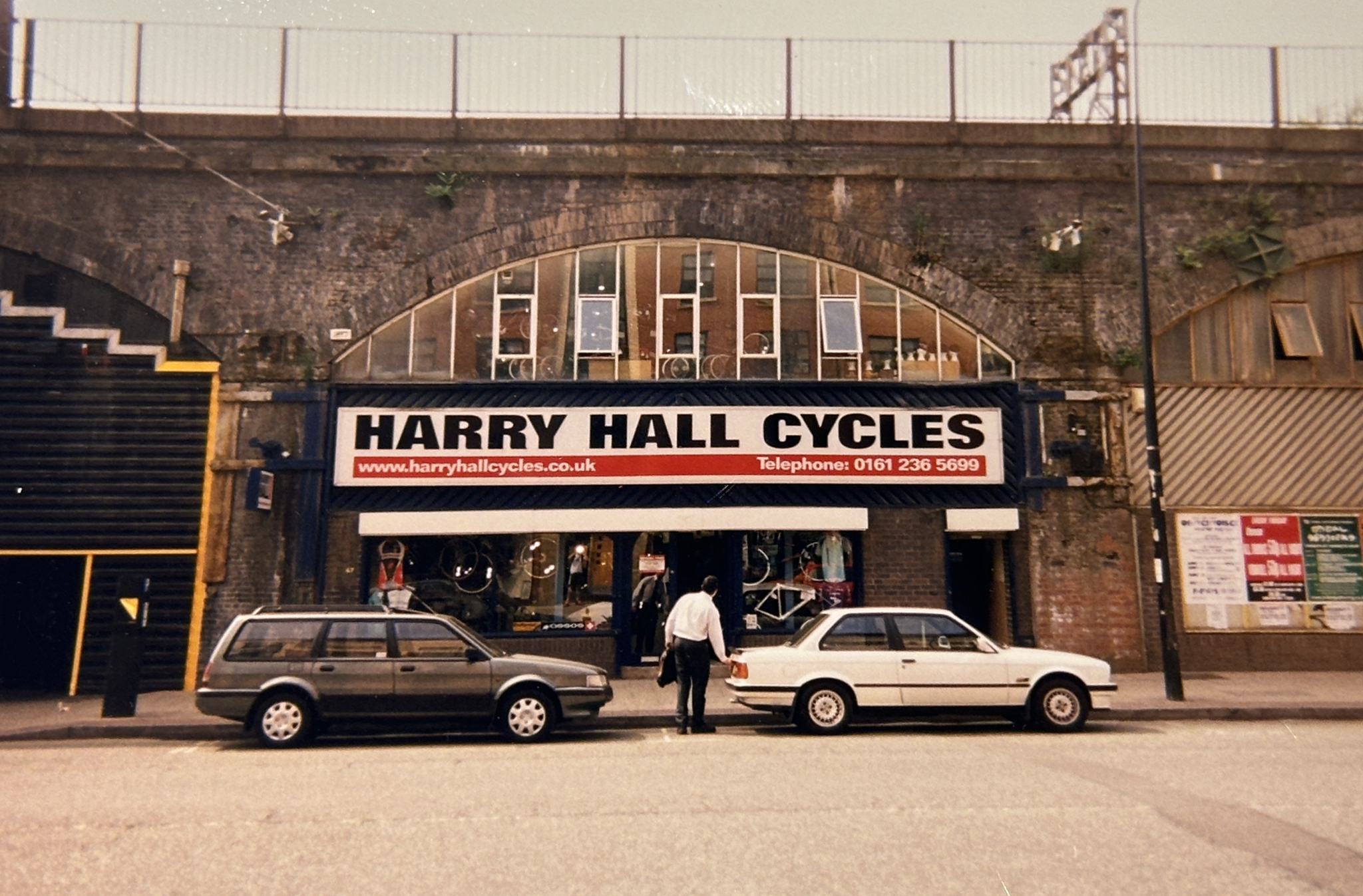
Railway arches traditionally accommodated businesses that needed space but could tolerate fairly basic conditions: mechanics, metal fabricators (including my friend Jon), workshops, storage companies and, in this case, a large bicycle shop. They were rarely polished premises, but the rent was supposed to reflect that.
Then the ownership model changed.
In 2019, Network Rail completed the £1.46 billion sale of a commercial property portfolio containing 5,261 rental spaces, most of them railway arches. It was sold on a 150-year lease to Blackstone and Telereal Trillium, which created the Arch Company to operate it.
The National Audit Office later expressed concern that the effect on tenants had not been an explicit objective of the sale and had only been considered late in the process. Small businesses elsewhere in the country subsequently reported very substantial rent increases.
There is also a wider problem with “market rent”. The market is established through comparisons. Once basic industrial arches are converted into bars, restaurants and polished leisure units commanding higher rents, those figures can become evidence at the next rent review, even for the mechanic, fabricator or workshop still operating from a damp arch nearby.
I can relate. I also rented an arch behind Piccadilly until early this year. It was damp, and the rent had reached a level that no longer felt aligned with either the quality of the space or the kind of business it could realistically support.
Harry Hall Cycles finally announced its closure in 2023, after 67 years. It would be wrong to claim that rent alone closed the business: shopping habits, online retail and the wider costs of operating a city-centre shop have all changed. But its journey through Manchester tells a much larger story.
From Hyde Road to a shopfront in the Corn Exchange; from its vast and eccentric basement to the then-affordable Northern Quarter; and finally into a railway arch… it repeatedly found the kinds of spaces in which an independent business could operate.
Eventually, even those spaces became difficult to sustain.
This is the less-discussed side of gentrification: not simply buildings being repaired and neighbourhoods becoming more desirable, but the gradual loss of the affordable, imperfect spaces in which independent businesses could survive.
We talk frequently about affordable housing, but cities also need affordable places in which people can work, repair things, make things, sell specialist products and try out ideas. If every unit has to produce the return expected from a restaurant, bar or national chain, the city inevitably becomes more corporate.
Manchester may continue to grow, but growth and character are not the same thing.
A city’s personality is not created by branding, luxury apartments or carefully named “districts”. It is created by people having enough room, and affordable enough room, to do something interesting.
Once those businesses disappear, the character they created goes with them. And once the final old signs are stripped away, it becomes increasingly difficult even to remember that they were there.
Harry Hall archive photograph: photographer unknown. Please let me know if you can help identify the original source.
1973 Lancaster Arcade photograph: Manchester Libraries Archives
c.2000 photo on Whitworth Street West: Cris Bloomfield